Blogs, insights, guides and videos on India's unlisted market — all in one place.


<h4>The Story: Why Were Indian Startups Registered Abroad in the First Place?</h4> <p>Over the past 10 years, many Indian startups like Razorpay, Groww, Meesho, and Pine Labs were not technically Indian companies. Their official parent companies were based in countries like Singapore or the US. This wasn’t a mistake — it was a strategy. Here's why:</p> <h4>1. To Raise Money More Easily</h4> <p>Imagine you are a startup founder in India. Global investors like Sequoia or Tiger Global are ready to fund you — but they are more comfortable investing in a US or Singapore company because of easier legal systems and tax rules there. So, many Indian founders created parent companies outside India just to get that funding.</p> <h4>2. Fewer Rules Outside India</h4> <p>Earlier, India had very strict rules under RBI and FEMA about how foreign money could come into Indian companies, how shares could be sold, and how founders could take money out. Places like Singapore were much simpler. That’s why companies flipped their structure — operations stayed in India, but the HQ was abroad.</p> <h4>3. Less Tax and Less Paperwork</h4> <p>Some foreign countries had lower tax rates and easier laws. Companies like Razorpay earned money in India through their Indian subsidiary and paid taxes on profits here, but since the parent company was based abroad, the <strong>major capital gains, ESOP payouts, and IPO exits benefited the foreign holding company</strong>. That means when the company was sold or listed, the <strong>government of Singapore or the US received the tax on gains, not India</strong>.</p> <p><strong>Example:</strong> Razorpay made most of its money from Indian merchants and paid corporate taxes on that income in India. Razorpay was originally <em data-start="41" data-end="50">flipped</em> to <strong data-start="54" data-end="67">Singapore</strong> around 2015–16 to raise global capital easily. However, sometime <strong data-start="133" data-end="161">after its Series B round</strong>, Razorpay <strong data-start="172" data-end="242">incorporated an entity in the U.S. as its ultimate holding company</strong> — this is quite common in startup structures. <br /><br />When Razorpay eventually goes for an IPO or a large stake sale, the <strong>capital gains will occur at the US parent level</strong>, not in India. US will collect the tax on that gain. As a result, India — despite being the place where the business was built and scaled — doesn’t get a share of those capital gains taxes. Indian investors and the Indian government both lose out.</p> <div><hr /></div> <h3>What Changed? Why Are They Coming Back to India?</h3> <p>Now, in 2024–25, the trend is reversing. Many startups are shifting their official base back to India. Here's why:</p> <h4>1. They Want to List in India</h4> <p>Companies like Razorpay, Groww, and Pine Labs are preparing for IPOs. And to be listed on Indian stock exchanges like NSE or BSE, the company must be registered in India. Foreign companies can't directly list in India. So, they are coming back.</p> <h4>2. High Taxes Abroad, While Business is in India</h4> <p>Most of their income is from Indian users, but they were paying crores of rupees in taxes abroad. For example, even though Razorpay makes most of its money from Indian merchants, the <strong>profits and exits were taxed in Singapore</strong>, where the parent entity is based. India lost out on that capital gains tax. By shifting back to India, they’ll pay taxes where the business is actually done — benefiting the Indian economy.</p> <h4>3. Indian Rules Are Easier Now</h4> <p>The Indian government has improved startup rules — like easier ESOP taxation, better FDI rules, and simpler IPO norms. India has also built amazing tech infrastructure like UPI, Aadhaar, ONDC, and GST. It’s now much easier to build and grow startups here.</p> <h4>4. Foreign Structures No Longer Have Big Advantages</h4> <p>Countries are tightening international tax rules. Global investors are now okay investing in Indian companies too. So, the earlier benefits of being based abroad are fading.</p> <h4>5. Higher Valuation Potential in Indian Markets</h4> <p>Another big reason is valuation. Startups expect <strong>better valuation multiples in the Indian market</strong> than they would get in the US or Singapore. Indian retail investors understand the scale and impact of these companies. A local listing often leads to better brand recognition and higher valuations — especially in sectors like fintech and consumer internet where growth visibility is strong.</p> <div><hr /></div> <h3>What Does This Mean for You as an Unlisted Investor?</h3> <p>If you own shares in unlisted startups like Razorpay or Pine Labs, this is great news:</p> <ul data-spread="false"> <li> <p>The company is <strong>getting ready to list</strong>, which means a potential exit for you.</p> </li> <li> <p>Since they’re becoming Indian entities again, all legal and tax processes become <strong>simpler and local</strong>.</p> </li> <li> <p>A domestic listing means you’ll get <strong>Indian market valuation</strong>, not limited by foreign rules.</p> </li> </ul> <div><hr /></div> <h3>Remember Flipkart?</h3> <p>Flipkart was registered outside India. So when Walmart acquired it, most of the exit value stayed offshore. Indian retail investors missed the chance to participate in that massive growth story. Worse, the Indian government <strong>didn’t earn capital gains tax</strong> on that transaction, even though the value was built by Indian consumers and sellers.</p> <p>Today’s founders don’t want that mistake repeated. They are choosing India over Delaware — and this could start a new wave of tech IPOs from Indian soil.</p> <div><hr /></div> <h3>In Summary</h3> <p>Startups are shifting their base back to India because:</p> <ul data-spread="false"> <li> <p>They want to list here</p> </li> <li> <p>They’re paying unnecessary taxes abroad</p> </li> <li> <p>Indian rules are finally startup-friendly</p> </li> <li> <p><strong>They expect better valuations in the Indian market</strong></p> </li> </ul> <p>As an investor on <a href="http://www.unlistedzone.com">UnlistedZone</a>, keep an eye on such shifts. These often come <strong>just before IPOs or major value unlocks.</strong></p>

<p>India’s power trading market is set for a major transformation with the introduction of Market Coupling. Under this policy, all power exchanges like IEX, PXIL, and HPX will follow a Uniform Market Clearing Price, ensuring a single electricity price across the country. This levels the playing field—benefiting smaller exchanges like PXIL while challenging IEX’s price discovery advantage. What does this mean for the future of power trading in India? Watch to find out.</p>
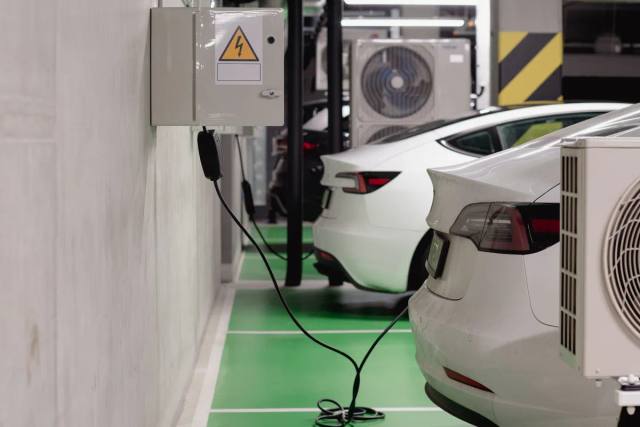
<p>📢 NSE has got approval from SEBI — now Monthly Electricity Futures are going to come! ⚡ This move will deepen India's power market, hedging tools will be introduced to avoid price volatility, and investments from generation to retail will get a boost. 🌍 India needs $250 billion every year by 2047 for net-zero target! 🌞 Solar and wind will become majority source of capacity by 2030. This move can make NSE a game-changer in the power sector!</p>
<h4 data-pm-slice="1 1 []">1. The Origin: A Dual-Business Structure</h4> <p>Sterlite Power was originally a diversified entity housing two core verticals:</p> <ul data-spread="false"> <li> <p><strong>Transmission Infrastructure (Sterlite Grid)</strong>: Focused on building and operating high-voltage power transmission lines across India.</p> </li> <li> <p><strong>Global Products Division</strong>: Manufacturing and supplying power conductors, optical ground wire (OPGW), and high-performance cables used in transmission networks.</p> </li> </ul> <p>These businesses ran under one umbrella until 2024.</p> <div><hr /></div> <h4>2. The Big Split: GIC Backs Transmission Business</h4> <p>In <strong>October 2024</strong>, Sterlite Power underwent a strategic <strong>demerger</strong>, separating its operations into:</p> <ul data-spread="false"> <li> <p><strong>Sterlite Grid (Transmission Assets Business)</strong></p> </li> <li> <p><strong>Sterlite Power (now renamed Sterlite Electric, focused on Products & Solutions)</strong></p> </li> </ul> <p>The trigger behind this move was global investor <strong>GIC</strong>’s interest in the <strong>stable cash flow model</strong> of the transmission business. GIC invested <strong>~$500 million for a 49% stake</strong> in Sterlite Grid. This arm will remain unlisted and focus on owning regulated transmission assets.</p> <p>However, controversy followed as Sterlite introduced a new company — <strong>Serentica Renewables</strong> — under the Sterlite Power umbrella, which began developing <strong>renewable-linked transmission lines</strong>. Existing shareholders of Sterlite Power received <strong>no economic participation</strong> in Serentica, raising governance concerns.</p> <div><hr /></div> <h4>3. What Serentica Renewables Does</h4> <p>Serentica Renewables is focused on:</p> <ul data-spread="false"> <li> <p>Building renewable energy projects (primarily solar and wind)</p> </li> <li> <p>Developing transmission lines to evacuate power from renewable sites to consumption centers</p> </li> <li> <p>Targeting industrial decarbonization and round-the-clock (RTC) power supply</p> </li> </ul> <p>This business is <strong>separate from Sterlite Grid</strong> and functions under a different financial structure.</p> <p>Notably, <strong>Serentica is backed by KKR</strong>, which invested nearly <strong>$650 million</strong>, making it one of the most ambitious decarbonization platforms in India. Its positioning in the energy transition value chain overlaps with Sterlite’s original domain, further deepening concerns about shareholder value dilution.</p> <div><hr /></div> <h4>4. The New Avatar: Sterlite Electric</h4> <p>Post demerger, the remaining business — focused on the <strong>Products and Solutions</strong> segment — has been rebranded as <strong>Sterlite Electric</strong>.</p> <h5>Product Portfolio:</h5> <ul data-spread="false"> <li> <p><strong>Conductors</strong>: Conventional and high-efficiency types</p> </li> <li> <p><strong>Cables</strong>: Extra high voltage (EHV), medium voltage (MV), and low voltage (LV) cables</p> </li> <li> <p><strong>OPGW</strong>: Optical Ground Wire for transmission networks</p> </li> <li> <p><strong>HVAC and Accessories</strong>: Solutions to improve grid performance</p> </li> </ul> <p>Sterlite Electric is now focusing on expanding this products segment globally, capitalizing on India’s transmission modernization and international demand from utilities and infrastructure projects.</p> <div><hr /></div> <h4>5. IPO Intimation: A Major Liquidity Event</h4> <p>While the <strong>Draft Red Herring Prospectus (DRHP)</strong> is yet to be filed, Sterlite Electric has officially initiated steps toward a public listing.</p> <ul data-spread="false"> <li> <p>The IPO will consist of a <strong>fresh issue</strong> component and an <strong>Offer for Sale (OFS)</strong> by existing investors.</p> </li> <li> <p><strong>ENAM Holdings and GEF Capital Partners</strong>, who together invested <strong>₹725 Cr in 2024 for a 10% stake</strong>, had valued the business at <strong>₹7,250 Cr</strong>.</p> </li> <li> <p>The company is expected to use IPO proceeds to reduce debt and fund expansion in cable manufacturing and international markets.</p> </li> </ul> <p>Sterlite Electric will likely position itself alongside <strong>APAR Industries</strong>, its closest listed peer in the specialized cables and conductors space.</p> <div><hr /></div> <h4>6. Share Price Movement: A Volatile Journey</h4> <p>Let’s trace the trajectory of Sterlite Power’s unlisted share price:</p> <ul data-spread="false"> <li> <p><strong>2020</strong>: Traded at ₹700–800 (Implied Valuation: ₹9,600 Cr)</p> </li> <li> <p><strong>2022</strong>: Reached ₹1,600 on IPO anticipation (Valuation: ~₹19,000 Cr)</p> </li> <li> <p><strong>Post-2022</strong>: Declined to ₹800–900, then adjusted to ₹400–450 after 1:1 Bonus Issue</p> </li> <li> <p><strong>2023–2024</strong>: Price steadily rose again to ₹800 before the demerger</p> </li> <li> <p><strong>Current Unlisted Share price</strong></p> <ul data-spread="false"> <li> <p>Sterlite Electric (formerly Sterlite Power): ~₹650</p> </li> <li> <p>Sterlite Grid (newly listed): ~₹375</p> </li> </ul> </li> </ul> <p> </p> <div><hr /></div> <h4>7. Final Thoughts</h4> <p>The story of Sterlite Electric is one of strategic separation, private equity trust, and a pivot toward core product offerings. While investors lost exposure to the transmission-linked renewables play via Serentica, the upcoming IPO could unlock value in the <strong>products and solutions</strong> vertical.</p> <p>The key to Sterlite Electric’s success post-listing will depend on:</p> <ul data-spread="false"> <li> <p>Sustaining export growth and international orders</p> </li> <li> <p>Margin stability amid volatile raw material prices</p> </li> <li> <p>Scaling up its cable division to compete with global majors</p> </li> </ul> <p>As the IPO nears and unlisted activity heats up, Sterlite Electric is a name to watch — especially for those looking to tap into India's long-term power infrastructure growth.</p>
<h2 data-pm-slice="1 1 []">Introduction</h2> <p>Kineco Limited started as a small composite manufacturing company in Goa in 1995. Initially, it made simple products like chemical tanks and industrial containers. But over time, it moved into high-technology areas like defence, aerospace, and railways.</p> <p>What changed everything was when Kineco partnered with large Indian and foreign companies through <strong>joint ventures (JVs)</strong>. These partnerships helped Kineco gain new technology, adopt global best practices, and build world-class products.</p> <div><hr /></div> <h2>What is Composite Manufacturing?</h2> <p>In simple terms, composite manufacturing means making products using a combination of strong and lightweight materials like carbon fiber and fiberglass. These materials are:</p> <ul data-spread="false"> <li> <p><strong>Stronger than steel but much lighter</strong></p> </li> <li> <p><strong>Used where performance, safety, and weight matter the most</strong> — like in aircraft, fighter jets, metro trains, and even defence equipment.</p> </li> </ul> <p>Examples:</p> <ul data-spread="false"> <li> <p>A carbon fiber bridge that can be carried by a soldier but strong enough to handle vehicles.</p> </li> <li> <p>Aircraft body parts that are lighter and more fuel-efficient.</p> </li> </ul> <div><hr /></div> <h2>A) Kineco's Business Model: Four Key Segments</h2> <h3>1. <strong>Railways Division</strong> – High Volume, Lower Margins</h3> <ul data-spread="false"> <li> <p><strong>What it makes:</strong> Interior panels, toilet modules, and driver cabins for trains</p> </li> <li> <p><strong>Where it's used:</strong> Metro trains, Indian Railways, and Vande Bharat trains</p> </li> <li> <p><strong>Why it matters:</strong> These parts are lighter, rust-free, and easier to maintain</p> </li> </ul> <h3>2. <strong>Defence Division</strong> – High Margin, Strategic Importance</h3> <ul data-spread="false"> <li> <p><strong>What it makes for Navy:</strong> Sonar domes (a dome fitted under warships that helps detect submarines underwater)</p> </li> <li> <p><strong>For Air Force:</strong> Radomes (protect radar on fighter jets without affecting performance)</p> </li> <li> <p><strong>For Army:</strong> Lightweight carbon-fiber bridges — foldable, portable bridges that can be deployed in warzones</p> </li> </ul> <p>Kineco has played a key role in India’s ‘Make in India’ defence mission through DRDO collaborations — delivering projects like the Indigenous Sonar Dome, carbon fiber heliportable bridges, composite radomes for AEWACS aircraft, and submarine model fabrication.</p> <h3>3. <strong>Aerospace Division</strong> – Global Exposure ( Only company in India having partnership with Global aerospace players for aerospace composite manufacturing )</h3> <ul data-spread="false"> <li> <p><strong>What it makes for Airbus & Boeing:</strong> Aircraft fuselage panels, wing assemblies, fairings (covers for joints), and cabin interiors. Kineco’s joint venture has built a strong brand image, enabling it to supply critical composite parts and sub-assemblies to global aerospace giants like Boeing and Airbus.</p> </li> <li> <p><strong>How it's supplied:</strong> Through Tier-1 vendors — Kineco does precision work and Tier-1 vendors integrate and ship to Airbus/Boeing</p> </li> </ul> <h3>4. <strong>Industrial Division</strong> – Original Business</h3> <ul data-spread="false"> <li> <p><strong>What it makes:</strong> FRP (fiber-reinforced plastic) tanks and pressure vessels for chemical industries</p> </li> <li> <p><strong>JV with Exel Composites:</strong> Supplies composite profiles for renewable and infrastructure sectors</p> </li> <li> <p><strong>New Addition: Pultrusion Business (Part of Industrial Division)</strong></p> <ul data-spread="false"> <li> <p>Started in 2015 with CommScope as anchor client</p> </li> <li> <p>First product: Thin-walled radomes for mobile tower antennas</p> </li> <li> <p>Later added telecom composite smart poles for fixed-line broadband — Reliance Jio placed order for 25,000 poles</p> </li> <li> <p>In 2021, entered JV with Exel Composites (Finland) — the world’s largest in pultruded composites</p> </li> <li> <p>JV named <strong>Kineco Exel Composites India Pvt Ltd</strong>, based in Goa, servicing telecom, infra, and utility sectors</p> </li> </ul> </li> </ul> <div><hr /></div> <h2>B) Timeline of Key JVs and How They Helped Kineco Grow</h2> <table style="width: 100.039%;"> <tbody> <tr> <th style="width: 12.5234%; text-align: center;">Year</th> <th style="width: 40.6951%; text-align: center;">JV/Change</th> <th style="width: 46.7281%; text-align: center;">Purpose & Learning Outcome</th> </tr> <tr> <td style="width: 12.5234%; text-align: center;">2005</td> <td style="width: 40.6951%; text-align: center;">JV with Kaman Aerospace (USA)</td> <td style="width: 46.7281%; text-align: center;">Helped Kineco enter aerospace; learned global standards in quality and precision machining</td> </tr> <tr> <td style="width: 12.5234%; text-align: center;">2011</td> <td style="width: 40.6951%; text-align: center;">JV with Exel Composites (Finland)</td> <td style="width: 46.7281%; text-align: center;">Introduced advanced pultrusion technology; allowed entry into infrastructure and renewable segments</td> </tr> <tr> <td style="width: 12.5234%; text-align: center;">2013</td> <td style="width: 40.6951%; text-align: center;">JV with Alta (now 89.66% stake)</td> <td style="width: 46.7281%; text-align: center;">Focused on railway interiors; gave volume business and steady cash flows</td> </tr> <tr> <td style="width: 12.5234%; text-align: center;">2024</td> <td style="width: 40.6951%; text-align: center;">Acquired full stake in Kineco Kaman</td> <td style="width: 46.7281%; text-align: center;">Gained complete control of aerospace operations and moved up the value chain</td> </tr> </tbody> </table> <blockquote> <p><strong>Summary:</strong> These JVs acted like finishing schools for Kineco. From each partner, the company picked up specific technical know-how and global practices, which it later scaled independently. This collaborative learning helped Kineco move from basic tank manufacturing to supplying parts for fighter jets and commercial aircraft.</p> </blockquote> <div><hr /></div> <h2>C) Financial Snapshot</h2> <table style="width: 34.6705%;"> <tbody> <tr> <td style="text-align: center; width: 46.2542%;"><strong>Metric</strong></td> <td style="text-align: center; width: 31.2216%;"><strong>FY2024</strong></td> <td style="text-align: center; width: 22.7417%;"><strong>FY2023</strong></td> </tr> <tr> <td style="text-align: center; width: 46.2542%;">Revenue (₹ Cr)</td> <td style="text-align: center; width: 31.2216%;">175</td> <td style="text-align: center; width: 22.7417%;">167</td> </tr> <tr> <td style="text-align: center; width: 46.2542%;">Profit After Tax</td> <td style="text-align: center; width: 31.2216%;">8 Cr</td> <td style="text-align: center; width: 22.7417%;">-8.5 Cr</td> </tr> <tr> <td style="text-align: center; width: 46.2542%;">EBITDA Margin (%)</td> <td style="text-align: center; width: 31.2216%;">15.4%</td> <td style="text-align: center; width: 22.7417%;">3.6%</td> </tr> <tr> <td style="text-align: center; width: 46.2542%;">EPS (₹)</td> <td style="text-align: center; width: 31.2216%;">12.78</td> <td style="text-align: center; width: 22.7417%;">-13.58</td> </tr> </tbody> </table> <blockquote> <p><strong>Insight:</strong> Defence and aerospace now contribute to most of the profits. Railways bring consistent cash flow.</p> </blockquote> <div><hr /></div> <h2>D) Key Insights from Defence & Aerospace Conference 2025</h2> <ol start="1" data-spread="false"> <li> <p> Kineco is one of India's top composite manufacturing companies.</p> </li> <li> <p> Airbus & Boeing are increasing orders through their Tier-1 suppliers who work with Kineco.</p> </li> <li> <p>China is a competitor in exports, but India offers higher-quality materials.</p> </li> <li> <p>Global composite manufacturing market is expected to touch $3 billion by 2030.</p> </li> <li> <p>Carbon fiber remains a critical imported input, especially for aerospace.</p> </li> <li> <p>Kineco supplies parts to Vande Bharat (7% market share) and Tejas aircraft (45% carbon composite used).</p> </li> <li> <p>₹3,000 Cr order book in next 5 years and ₹4,000 Cr revenue guidance over next 5 years.</p> </li> </ol> <div><hr /></div> <h2>E) Why Kineco Has Strong Future Potential</h2> <ul data-spread="false"> <li> <p><strong>Strong Defence Pipeline:</strong> Long-term, high-value contracts with Indian defence sector</p> </li> <li> <p><strong>Entry Into Global Aerospace Supply Chain:</strong> Makes Kineco globally competitive</p> </li> <li> <p><strong>Export Opportunity:</strong> Growing demand in infrastructure and renewables globally</p> </li> <li> <p><strong>IPO Ready:</strong> Clean structure, high promoter holding, visible order book</p> </li> <li> <p><strong>Backed by Policy:</strong> "Make in India" and "Atmanirbhar Bharat" support local sourcing — Kineco benefits directly</p> </li> </ul> <div><hr /></div> <h2>Conclusion: In Simple Terms</h2> <p>Kineco began its journey by making basic industrial products like tanks. But through smart partnerships with global companies, it upgraded its technology and entered high-growth sectors like defence and aerospace.</p> <p>Today, it supplies to major Indian government projects like Vande Bharat trains and Tejas aircraft. It also supports global giants like Airbus and Boeing. The company expect a ₹3,000 Cr+ order book and expects ₹4,000 Cr+ in revenue in the next five years.</p> <p>As India focuses more on defence and aerospace self-reliance, companies like Kineco stand to gain massively. If it comes with an IPO in the future, it could be a valuable opportunity for early investors.</p> <div><hr /></div> <p><strong>📞 Want to invest in Kineco’s unlisted shares before the IPO? </strong>Explore more: <a href="https://unlistedzone.com/shares/kineco-limited-unlisted-share/">UnlistedZone Kineco Page</a></p>

<h2 data-pm-slice="1 1 []">Introduction</h2> <p>India's D2C revolution continues to make headlines, and Lenskart stands at the forefront of this transformative wave. Founded in 2010, Lenskart has rapidly evolved from an online eyewear startup into a full-fledged omnichannel retail powerhouse. Today, it boasts over 2,500 physical stores, a strong online presence, and a vertically integrated supply chain that manufactures millions of eyewear products annually. With global investor interest growing stronger than ever, Lenskart is now preparing to take its success to public markets — backed by a major valuation upgrade from the globally renowned financial firm Fidelity.</p> <h2>Key Highlights</h2> <h3>1. Fidelity’s Valuation Boost Signals Strong Investor Confidence</h3> <p>Fidelity, a major US-based financial firm, has revised Lenskart’s valuation upward by 21%, from $5 billion to $6.1 billion, as of April 2025. This update was disclosed in its latest portfolio filings and reflects robust investor confidence in the company's growth trajectory, market positioning, and profitability potential. This also follows a secondary share transaction in June 2024, where Fidelity joined other marquee investors such as Singapore’s Temasek.</p> <h3>2. IPO on the Horizon: Targeting a $10 Billion Valuation</h3> <p>According to sources reported by ET, Lenskart is preparing for a $1 billion IPO, aiming for a massive $10 billion valuation. To align with regulatory requirements, the company recently transitioned from "Lenskart Solutions Private Limited" to "Lenskart Solutions Limited," a necessary step before listing. This IPO could be one of the largest for an Indian consumer-tech brand in recent years.</p> <h3>3. Solid Financials in FY24</h3> <p>Lenskart's financial performance in FY24 paints a clear picture of a company on the rise:</p> <ul data-spread="false"> <li> <p><strong>Net Loss</strong> shrank significantly to ₹10 crore, down from ₹64 crore in FY23</p> </li> <li> <p><strong>Operating Revenue</strong> surged 43% year-on-year, reaching ₹5,428 crore</p> </li> <li> <p><strong>EBITDA</strong> (Earnings Before Interest, Taxes, Depreciation, and Amortization) rose to ₹856 crore</p> </li> </ul> <p>The dramatic improvement in profitability is largely attributed to operational efficiencies driven by technology, streamlined logistics, and better inventory management.</p> <h3>4. Impressive Funding Track Record</h3> <p>Lenskart has raised more than $2 billion in capital since its inception, making it one of India's most well-funded consumer tech startups. Key funding milestones include:</p> <ul data-spread="false"> <li> <p>A $200 million secondary funding round in June 2024, led by Temasek and Fidelity</p> </li> <li> <p>An additional $20 million investment by founders Peyush Bansal, Neha Bansal, and Sumeet Kapahi</p> </li> <li> <p>A $600 million raise in March 2023 from Abu Dhabi Investment Authority (ADIA) and ChrysCapital, which included a $450 million secondary component</p> </li> </ul> <p>This sustained capital influx underscores long-term investor belief in Lenskart’s vision and business model.</p> <h3>5. Rapid Expansion and Omnichannel Dominance</h3> <p>Lenskart has effectively disrupted the traditional eyewear market with its omnichannel model, combining the scale of offline retail with the efficiency of online commerce. Key scale metrics include:</p> <ul data-spread="false"> <li> <p>Annual production capacity of 25–40 million frames</p> </li> <li> <p>Over 2,500 retail outlets across India and Southeast Asia</p> </li> <li> <p>A robust online ecosystem with personalized virtual try-ons and AI-driven recommendations</p> </li> </ul> <p>This infrastructure not only ensures market reach but also significantly reduces customer acquisition and supply chain costs.</p> <h3>6. Award-Winning Brand Recognition</h3> <p>In recognition of its innovation and scale, Lenskart was awarded "Startup of the Year" at the <strong>Economic Times Startup Awards 2024</strong>. This prestigious honor reaffirms the company’s position as a pioneer in India's direct-to-consumer (D2C) segment and a leader in retail tech innovation.</p> <h2>Conclusion</h2> <p>Lenskart’s upgraded valuation, healthy financials, and rapid growth have made it one of the most watched pre-IPO companies in India. Its ability to scale both digitally and physically while maintaining profitability is rare in today’s startup ecosystem. As it prepares for a potentially landmark IPO, Lenskart stands as a testament to what Indian consumer startups can achieve with strong execution, innovation, and investor backing. Investors, analysts, and market observers alike will be watching closely as the company takes its next big leap.</p>
<h2 data-pm-slice="1 1 []">Introduction</h2> <p>The Indian Commodity Exchange (ICEX), once a SEBI-recognized commodity derivatives exchange, is undergoing a major transformation. After <strong>SEBI revoked its commodity license in 2023</strong>, ICEX is now realigning its business strategy. The company recently announced a <strong>name change</strong>, signaling a move away from its commodity exchange identity. For unlisted investors, this shift carries important lessons — particularly for those who invested based on perceived similarities to other successful exchanges like NCDEX.</p> <h2>What Went Wrong with ICEX?</h2> <p>ICEX was established with the ambition of becoming a prominent player in India’s commodity exchange space, offering trading in diamond contracts and other niche commodities. However, the exchange faced persistent challenges:</p> <ul data-spread="false"> <li> <p><strong>Low volumes and poor liquidity</strong></p> </li> <li> <p><strong>Lack of market participation</strong></p> </li> <li> <p><strong>Inability to scale in a competitive segment dominated by MCX and NCDEX</strong></p> </li> </ul> <p>Eventually, SEBI stepped in and <strong>revoked its recognition as a commodity derivatives exchange</strong> due to non-compliance with regulatory requirements.</p> <h2>Current Activities Post-License Revocation</h2> <p>According to the latest disclosures and stakeholder communication, ICEX is now exploring <strong>alternative business models</strong> beyond commodity trading. While the exact nature of these new ventures hasn’t been publicly confirmed, early signs suggest:</p> <ul data-spread="false"> <li> <p>Rebranding and restructuring efforts underway</p> </li> <li> <p>Evaluation of digital or financial technology platforms</p> </li> <li> <p>Potential pivot to B2B fintech or capital market infrastructure services</p> </li> </ul> <p>These efforts reflect ICEX’s intent to <strong>repurpose its platform and infrastructure</strong> into a viable business model aligned with the evolving financial ecosystem.</p> <h2>Lessons for Unlisted Market Investors</h2> <p>ICEX’s trajectory offers a critical case study for investors in the unlisted/pre-IPO market:</p> <h3>1. <strong>Avoid Investing on Brand Perception Alone</strong></h3> <p>Many retail and HNI investors bought ICEX shares in the unlisted space thinking it could be the "next NCDEX" — simply because it shared the word “exchange.” However, fundamental differences in business viability, market share, and regulatory compliance made the two exchanges incomparable.</p> <h3>2. <strong>Verify Regulatory Status and Core Business</strong></h3> <p>A SEBI license is not a formality. It's a regulatory validation that underpins trust. Once ICEX lost its SEBI license, it effectively lost its core revenue stream.</p> <h3>3. <strong>Be Ready for Long Gestation Periods</strong></h3> <p>Even if ICEX manages to build a new business from scratch, <strong>shareholders may need to wait several years</strong> before seeing tangible returns. Any future value creation will depend on:</p> <ul data-spread="false"> <li> <p>Market acceptance of the new business model</p> </li> <li> <p>Management execution</p> </li> <li> <p>Regulatory landscape</p> </li> </ul> <h2>Outlook for Existing Shareholders</h2> <p>So what’s next for those holding ICEX unlisted shares?</p> <ul data-spread="false"> <li> <p><strong>Short-term outlook remains uncertain</strong>, as the company is in a transition phase</p> </li> <li> <p><strong>Medium- to long-term prospects</strong> depend on whether the company can identify and execute a scalable business opportunity</p> </li> <li> <p>If successful, <strong>investors might see recovery in value</strong> or even a profitable exit in future</p> </li> </ul> <p>However, this requires <strong>cautious optimism</strong>, as there is no assurance the new business will gain traction.</p> <h2>Conclusion</h2> <p>The ICEX story is a timely reminder for unlisted investors to focus on <strong>fundamentals, regulatory compliance, and business visibility</strong>. While rebranding may offer ICEX a new lease on life, the road ahead will be determined by execution.</p> <p><strong>For now, investors should track developments but refrain from speculative buying without clarity on the company’s future direction.</strong></p> <div><hr /></div> <p><strong>For more such deep-dive analysis, visit <a href="unlistedzone.com">unlistedzone.com</a></strong></p>

<p>In a record-setting move, SBI Mutual Fund has directly acquired a 3.6% stake in Asian Paints for ₹7,704 crore (approximately \$900 million) from Reliance Industries. This one-on-one block deal is likely the biggest ever completed solely between an Indian asset manager and a single seller. With this transaction, Reliance has effectively monetised a substantial portion of a long-standing investment with exceptional returns.</p> <p><strong>1. Reliance Capitalises on 17-Year Investment</strong><br />Reliance sold 3.5 crore shares of Asian Paints, held through Siddhant Commercials Ltd, at ₹2,201 per share, while the stock closed at ₹2,218.05 on the day of the deal. The sale marks the realisation of nearly 23x returns on its original investment, including dividends. Despite the stake sale, Reliance will retain 87 lakh shares in Asian Paints.</p> <p><strong>2. Past Attempts and Pricing Challenges</strong><br />Back in May, Reliance restarted its divestment efforts, with Bank of America originally enlisted to oversee the transaction. Initial bids at 6-7% below market value led Reliance to delay the process. However, this week’s successful block deal indicates renewed confidence and favourable conditions for executing such a significant transaction.</p> <p><strong>3. Reliance’s Prior Market Activity</strong><br />Insiders revealed that Reliance had been gradually offloading Asian Paints shares in recent weeks using various brokers. Yet, it had refrained from executing a large, singular deal until now. This transaction follows years of strategic consideration—Reliance had explored selling its Asian Paints stake five years ago while preparing India’s biggest rights issue, but instead raised \$25 billion from global investors to support its telecom and retail ventures.</p> <p><strong>4. Asian Paints’ Struggles in a Shifting Market</strong><br />Once a Nifty blue-chip favourite, Asian Paints has faced declining fortunes. Over the past three years, its share price has dropped by 17%, and FY25 turned out to be one of its weakest years in recent memory. The company’s decorative segment, which constitutes 87% of its revenue, declined 5% YoY, with volume growth of just 2.5%—the slowest in over 20 years.</p> <p><strong>5. Competitive Pressures Shake Market Position</strong><br />Asian Paints’ dominance has been under siege. According to Elara Securities, its market share slipped from 59% to 52% in FY25. New entrants like Aditya Birla’s Opus Paints and aggressive plays by JSW Paints and Grasim have intensified the competitive landscape. JSW is reportedly close to acquiring the Dulux brand from Akzo Nobel, which could further disrupt market dynamics.</p> <p><strong>6. Financial Institutions Still Bullish</strong><br />Despite the headwinds, domestic institutional investors continue to back Asian Paints. LIC holds the largest chunk at 8.29%, while SBI Mutual Fund and ICICI Prudential own 1.51% and 1.24%, respectively. Combined, local financial institutions control over 5.6% of the company’s equity.</p> <p><strong>7. Company Scale and Global Reach</strong><br />Asian Paints remains a major player despite its recent slump. Holding a 44% market share in India’s decorative paints segment, the company ranks as the second-largest in Asia and eighth globally. Its domestic production capacity stands at 1.85 million kilolitres, serving customers in over 60 countries. Its robust network includes more than 74,000 dealers and over 50,000 shade-mixing machines.</p>

<h2 data-pm-slice="1 1 []">Introduction</h2> <p>Once a poster child of India’s premium beer startup ecosystem, <strong>Bira 91</strong> is now going through a tough phase. After showing significant promise and raising millions from global investors, the company faced <strong>major disruptions over the last one year</strong> — affecting operations, cash flows, and investor sentiment. What went wrong, and where is Bira heading now?</p> <div><hr /></div> <h2>What Went Wrong?</h2> <h3>1. <strong>Conversion from Private to Public Limited</strong></h3> <p>In FY24, Bira took the step to convert from a <strong>private limited company to a public limited company</strong> — an essential move to prepare for a future IPO or structured fundraising. However, this transition wasn't smooth.</p> <blockquote> <p>During this period, <strong>state excise authorities</strong> in multiple regions failed to promptly renew Bira’s licenses, citing changes in company structure. This directly halted production and sales in key markets for <strong>several months</strong>, resulting in a <strong>significant revenue hit</strong>.</p> </blockquote> <h3>2. <strong>Operational Freeze Due to Excise Rules</strong></h3> <p>The biggest issue was <strong>regulatory ambiguity</strong> around excise policies. Since alcohol is a state-regulated business, each state has different rules for license renewal. When Bira changed its corporate structure, many state excise departments treated it as a “new entity,” delaying license transfers.</p> <p>This red tape led to:</p> <ul data-spread="false"> <li> <p>Temporary shutdown of breweries</p> </li> <li> <p>Disrupted supply chain and market presence</p> </li> <li> <p>Declining revenue despite high demand</p> </li> </ul> <div><hr /></div> <h2>Current Fundraising: Right Issue in Focus</h2> <p>To stabilize operations and rebuild momentum, Bira has now brought in a <strong>Right Issue</strong> — an offer to existing shareholders to subscribe to new shares at a pre-fixed price.</p> <h3>✅ <strong>Amount Being Raised</strong>: ₹100 Crores</h3> <h3>✅ <strong>Price per Share</strong>: ₹325</h3> <h3>✅ <strong>Rights Ratio</strong>: 1:7 (i.e., 1 new share for every 7 held)</h3> <h3>✅ <strong>Purpose</strong>:</h3> <ul data-spread="false"> <li> <p>Working capital needs</p> </li> <li> <p>Payment of outstanding vendor dues</p> </li> <li> <p>Relaunch and reactivation of operations post disruptions</p> </li> </ul> <div><hr /></div> <h2>Valuation & Learning for Unlisted Investors</h2> <p>Let’s break down the valuation:</p> <ul data-spread="true"> <li> <p><strong>Pre-money equity base</strong>: 21,830,750 equity shares</p> </li> <li> <p><strong>CCPS (Convertible Preference Shares)</strong> outstanding: 38,092,815</p> </li> <li> <p><strong>ESOPs</strong> - 3,611,496</p> </li> <li> <p><strong>OCPS</strong> - 123,750</p> </li> <li> <p><strong>Implied Equity Valution of Right Issue</strong>: 63,658,811*325 = <strong>INR 2100 Cr.</strong></p> </li> <li> <p>This valuation is a <strong>sharp decline</strong> from earlier levels when Bira was raising money at <strong>significantly higher multiples</strong> from investors like Sequoia and Sofina. </p> </li> </ul> <h3>💡 <strong>Learning for Investors:</strong></h3> <p>Many unlisted investors bought Bira shares expecting a bumper IPO — riding on the success of the brand. However, poor policy handling and weak contingency planning <strong>erased months of business growth</strong>.</p> <p>In the unlisted space, <strong>valuation is not just about brand</strong> — <strong>execution</strong> and <strong>regulatory preparedness</strong> matter equally.</p> <div><hr /></div> <h2>What Lies Ahead?</h2> <p>Bira has started stabilizing operations and is working towards:</p> <ul data-spread="false"> <li> <p>Re-establishing its distribution network</p> </li> <li> <p>Rolling out marketing campaigns again</p> </li> <li> <p>Exploring long-term fundraising to fuel growth</p> </li> </ul> <p>But until consistent revenue visibility returns, <strong>investors must remain cautious</strong>.</p> <div><hr /></div> <h2>Conclusion</h2> <p>The Bira 91 story is a classic reminder for unlisted market participants:</p> <blockquote> <p><strong>A strong brand without operational clarity can quickly lose market momentum.</strong></p> </blockquote> <p>While the current right issue gives existing shareholders a chance to average their costs and support the company, fresh investors should <strong>wait for execution visibility</strong> before re-entering.</p> <p>Stay updated with UnlistedZone for more such deep-dive analyses.<br /><br /></p> <p data-pm-slice="1 1 []"><strong>For more such deep-dive analysis, visit </strong><a href="http://www.unlistedzone.com"><strong>UnlistedZone.com</strong></a></p>
Indicative prices, company research and your enquiries — in your pocket. Get price notes on the names you follow and reach our team from anywhere.