Blogs, insights, guides and videos on India's unlisted market — all in one place.

<p><strong>Dinesh Gupta</strong> said the company’s products are in short supply because of high demand. “The stock is not widely available, as it is a private limited company. Thus, the maximum number of stakeholders is 200 only. We are strictly adhering to the minimum quantity of shares fixed at 100 shares,” he said.<br /><br /><a class="tatsu-animated-link-inner " href="https://economictimes.indiatimes.com/markets/stocks/news/liquor-stocks-in-low-spirits-but-this-unlisted-player-is-on-a-high/articleshow/71272338.cms" target="_blank" rel="noopener" aria-label="Read Full Article Here"><span class="tatsu-animated-link-text">Read Full Article Here</span></a></p>
<span style="font-size: 14pt;"><strong>Will seriously explore possibility; have to discuss the issue with investors’</strong></span> Fino Payments Bank, which started operations about two years ago, is likely to apply to the Reserve Bank of India (RBI) to convert itself into a small finance bank after the banking regulator allowed such conversion last week. While announcing the draft norms for on-tap licensing for small finance banks on September 13, RBI allowed the conversion of a payments bank to a small finance bank. <span style="font-size: 14pt;"><strong>Eligible for conversion</strong></span> The payments bank will be eligible for conversion as it is not backed by any industry house. RBI has barred corporate groups, which earn more than 40% income from non-financial activities, from applying for SFB license. In an interaction with The Hindu, Rishi Gupta, MD, and CEO of Fino Payments Bank said, “We will seriously explore the possibility<strong> [of converting into SFB].</strong> We are studying the norms. We have to discuss the issue with the investors.” For more detail click <span style="text-decoration: underline; font-size: 18pt;"><strong><a href="https://www.thehindu.com/business/Industry/fino-payments-bank-likely-to-apply-for-small-finance-bank-licence-says-md/article29478207.ece">link</a></strong></span> <strong>Source: The Hindu.</strong>
<span style="font-size: 12pt;"><strong>The Indian Premier League’s valuation grew nearly 7 percent in 2019 to $6.8 billion, boosted by an increase in brand values of two of its most popular franchises, according to a study. Brand values of Mumbai Indians and Chennai Super Kings rose by 8.5 percent and 13.1 percent, respectively, the study by Duff & Phelps said, adding it was on the back of the teams’ consistency in on-field performance.</strong></span> <span style="font-size: 12pt;">Read more at<strong> </strong><span style="text-decoration: underline;"><strong><a href="https://www.bloombergquint.com/business/indian-premier-leagues-brand-valued-at-68-billion-in-2019">Link</a></strong></span></span>
<span style="font-size: 12pt;"><strong>(i)</strong> The RBI yesterday have formed draft guidelines for <strong>Small Finance Bank(SFB).</strong></span> <span style="font-size: 12pt;"><strong>(ii) </strong>The Payment bank can now apply license for <strong>SFB</strong> if it has a <strong>Net-Worth of 200 Cr.</strong></span> <span style="font-size: 12pt;">" <em>This is good news for Fino-Payment Bank as they can now apply for SFB license. This will give them a lot of opportunities to work with which is lacking in the payment bank. For example, <strong>Payment Bank can't lend</strong>, and <strong>they can't have deposit more than 1 lakh</strong>. With SFBs license such limitation won't apply </em>".</span> <span style="font-size: 12pt;"><strong>(iii) </strong> Once they get license, Promoters' stake in SFBs should be brought down to 15% in 15 years.</span> <span style="font-size: 12pt;"><strong>(iv) </strong>SFBs have to mandatorily list within 3 years of net worth reaching <strong>~500 crores.</strong></span> <span style="font-size: 12pt;"><strong>(v)</strong> SFBs can distribute third-party financial products only after 3 years of operation.</span>
<span style="font-size: 12pt;"><strong>“A revolution in the making”</strong></span> <span style="font-size: 12pt;"><strong>The Story:</strong></span> <span style="font-size: 12pt;">Paytm is like a one-stop solution provider in the digital space, be it in transactions, shopping or investing in mutual funds. It has simplified banking and transactions to a much simpler level. It is viewed as a fin-tech company, a digital marketplace, and/or an application for monetary exchange. Paytm has applications ranging from a digital payments bank, ‘Paytm Payments Bank’ that allows users to open a digital account with Paytm to a mutual fund platform, Paytm money that makes investing simple and direct (with no commission). Paytm phenomenon has spread so rampantly that any shop, ranging from a local Kirana shop to a large retailer accepts transactions digitally through Paytm.</span> <span style="font-size: 12pt;"><strong>Entrepreneurship behind ‘Paytm’:</strong></span> <span style="font-size: 12pt;">Paytm, part of One97 Communications is founded by ‘Vijay Shekhar Sharma’. He is deeply passionate and committed to bringing India to the forefront of digital disruption with Paytm. His dream is to scale Paytm to the likes of the giants and be an example of “Made in India”.</span> <span style="font-size: 12pt;"><strong>Opportunities:</strong></span> <span style="font-size: 12pt;">Paytm is changing the day-to-day operations of urban consumers in India largely. It is disrupting the channel of ‘cash’ based transactions with the help of ‘e-wallets’. With the help of QR code or a phone number, transactions are being carried in seconds. This presents a huge opportunity for Paytm to change the minds of consumers from traditional banking to digital space. Paytm has forayed into the financial services platforms like ‘Investments’, ‘Insurance’, and ‘Payments Bank’. Paytm is currently the largest ‘e-wallet’ in India. As of 2018, only 7.6% of the population of India uses e-wallets[1]. This statistic shows the under penetration of digital wallets in India and the scope of growth it offers. The wallet space has been growing at a CAGR of nearly 30% for the past 3 years.</span> <span style="font-size: 12pt;">The key ‘Growth Drivers’ in this area include</span> <span style="font-size: 12pt;"><strong>a)</strong> Government initiatives like ‘Demonetization’ and UPI (unified payments interface), which helps people move towards digital wallets, thereby increasing the market share of Paytm.</span> <span style="font-size: 12pt;"><strong>b)</strong> Increase in penetration of smartphones with good internet connections’ helps in people shifting to digital wallets and online transactions. The transactions through Paytm are very smooth, efficient and simple to execute.</span> <span style="font-size: 12pt;"><strong>c)</strong> ·Paytm’s own marketing and advertising strategies help in gaining market share. Network effects. (More people using the same platform induces oneself to use it too)</span> <span style="font-size: 12pt;"><strong>Shareholding Pattern:</strong></span> <span style="font-size: 12pt;">One97 Communications Limited has marquee investors from all around the world. ‘Eminent Investors’ like Warren Buffett and Masayoshi Son (through their investment companies like Berkshire Hathaway and Softbank funds); ‘Visionaries’ like Jack Ma (through Alibaba) form the shareholder base. Paytm might benefit immensely with years of experience of veterans running the above companies. Paytm can gain insight into what the leading investors and visionaries are focussing on.</span> <span style="font-size: 12pt;"><strong>Challenges & Competitors:</strong></span> <span style="font-size: 12pt;">Firstly, there are no barriers to entry in the digital wallet and services space. It is essential to be efficient and be an innovator to retain the market share. Secondly, with many multinationals looking to be a part of the growth story of India have developed services equivalent to that of Paytm. For example, Tez from Google, PhonePe from Flipkart offer online transactions similar to Paytm. In Payments bank space, Airtel Payments Bank and Digibank by DBS (backed by Govt. of Singapore) present a challenge to Paytm.</span> <span style="font-size: 12pt;">Even traditional banking presents a challenge to all digital fin-tech companies, that of direct physical interaction with the customers. Even though consumers are changing their preferences, many people still are agnostic to the digital changes happening simply because there is no physical interaction possible with the agents and/or no physical branches present. Nevertheless, this is the cost as well as the differentiator of a digital bank</span> <span style="font-size: 12pt;"><strong>FINANCIALS:</strong></span> <span style="font-size: 12pt;"><strong>Total Income:</strong></span> <span style="font-size: 12pt;">The revenues have grown at a CAGR of nearly 100% for the past two years and the room for growth is phenomenal.</span> <span style="font-size: 12pt;"><strong>Net Income:</strong></span> <span style="font-size: 12pt;">The losses are due to the intense expansion Paytm is undertaking in its projects.</span> <table> <tbody> <tr> <td style="text-align: center;"><span style="font-size: 12pt;"><b> Particulars</b></span></td> <td style="text-align: center;"><span style="font-size: 12pt;"><b> 2018-19(Cr)</b></span></td> <td style="text-align: center;"><span style="font-size: 12pt;"><b>2017-18( Cr)</b></span></td> <td style="text-align: center;"><span style="font-size: 12pt;"><b>2016-17(Cr)</b></span></td> </tr> <tr> <td style="text-align: center;"><span style="font-weight: 400; font-size: 12pt;">FV</span></td> <td style="text-align: center;"><span style="font-weight: 400; font-size: 12pt;">10</span></td> <td style="text-align: center;"><span style="font-weight: 400; font-size: 12pt;">10</span></td> <td style="text-align: center;"><span style="font-weight: 400; font-size: 12pt;">10</span></td> </tr> <tr> <td style="text-align: center;"><span style="font-weight: 400; font-size: 12pt;">Revenue</span></td> <td style="text-align: center;"><span style="font-weight: 400; font-size: 12pt;">3579</span></td> <td style="text-align: center;"><span style="font-weight: 400; font-size: 12pt;">3314.8</span></td> <td style="text-align: center;"><span style="font-weight: 400; font-size: 12pt;">780.19</span></td> </tr> <tr> <td style="text-align: center;"><span style="font-weight: 400; font-size: 12pt;">Expense</span></td> <td style="text-align: center;"><span style="font-weight: 400; font-size: 12pt;">7730</span></td> <td style="text-align: center;"><span style="font-weight: 400; font-size: 12pt;">3884.95</span></td> <td style="text-align: center;"><span style="font-weight: 400; font-size: 12pt;">1961.29</span></td> </tr> <tr> <td style="text-align: center;"><span style="font-weight: 400; font-size: 12pt;">PAT</span></td> <td style="text-align: center;"><span style="font-weight: 400; font-size: 12pt;">-4172</span></td> <td style="text-align: center;"><span style="font-weight: 400; font-size: 12pt;">-1604.34</span></td> <td style="text-align: center;"><span style="font-weight: 400; font-size: 12pt;">-899.64</span></td> </tr> <tr> <td style="text-align: center;"><span style="font-weight: 400; font-size: 12pt;">EPS</span></td> <td style="text-align: center;"><span style="font-weight: 400; font-size: 12pt;">-743</span></td> <td style="text-align: center;"><span style="font-weight: 400; font-size: 12pt;">-318.44</span></td> <td style="text-align: center;"><span style="font-weight: 400; font-size: 12pt;">-194.73</span></td> </tr> </tbody> </table> <span style="font-size: 12pt;"><strong>CONCLUSION:</strong></span> <span style="font-size: 12pt;">Paytm stands to benefit from the explosive growth happening in India in the digital space. Nevertheless, its competitors also take a share of the growing pie. What makes Paytm stand out is the first-mover advantage in the minds of consumers that will play a role to a certain extent and the rapid scaling of the network to almost all throughout India. This is evident from the market share it commands UPI-based merchants payments, nearly 60%[3]. Paytm is very well integrated across all services, which many of its competitors lack. If Paytm tries to offer value to consumers by constantly innovating, it can prosper for a very long time.</span> <span style="font-size: 12pt;"><strong>Disclaimer:</strong></span> <span style="font-size: 12pt;">~This is not investment advice. The article published on UnlistedZone is only for educational purpose. Please consult your financial advisors to buy or sell shares.</span> <span style="font-size: 12pt;"><strong>Ref:</strong></span> <span style="font-size: 12pt;">[1] Statistics from https://www.emarketer.com/content/the-mobile-payments-series-india</span> <span style="font-size: 12pt;">[2] Annual report (2018-19) - One97 Communications Limited.</span> <span style="font-size: 12pt;">[3] https://www.livemint.com/companies/start-ups/paytm-dominates-upi-merchant-payment-segment-with-60-share-1560160951172.html</span>
Paytm became a household name overnight when the Indian government announced demonetization in Nov-16. From thereon the company is continuously gaining market share and currently, Paytm dominates UPI merchant payment segment with 60% share. The company provides telecom based value-added services to various telecom operators across the territory, payment gateway aggregator services, ticket services, utility bills payments, insurance, hotel booking services, etc. Recently, they got the license to operate as a stockbroker and they are also planning to give investors an option to buy direct mutual funds from their platform. The company is generating 56.86% revenue from Payment bank and 34.90% of the revenue from e-commerce The company has raised a lot of money in the last 4-5 years from foreign investors. The Berkshire Hathway in August-2018 had invested in Paytm at a valuation of 10 Billion dollars i.e ~ 68000 Cr. Recently, in the secondary round a few months back the company valued at 16 billion Dollar i.e. 1,12,000 Cr. The company in FY18-19 also issued ESOPs for a weighted average fair price of INR 6823. As on date, out of total paid-up capital, 83.04% (approx.) is held by Foreign Investor under Foreign Direct Investment scheme of RBI. The Foreign investors are One97 Communications Singapore Private Limited, One97 Communications Nigeria Limited, One97 USA Inc. One97 Communications FZ-LLC and Ciqual Limited. As on 31.03.2019, the company has 33 subsidiaries. Out of these, only 5 subsidiaries are in profit this year. The Paytm being the fancied name in the Indian market still not able to generate the kind of return investors were looking at. The losses are mounting like a pine tree. It has increased to Rs. ~4000 Cr in FY18-19 from Rs. ~800 Cr in FY16-17. The Payment gateway expense, Marketing, and business promotion, and Add expense contribute to the bulk of Paytm expense. In FY18-19, it has incurred an expense of 2253 Cr, 2823 Cr, and 619 Cr respectively in above heads. The most surprising part was the revenue growth in the year FY18-19. It was mere 6% as compared to last year which is the real concern. The Paytm has clocked a revenue of ~3500 Cr this year as compared to ~3300 Cr last year. With losses mounting and revenue not coming as desired, the path ahead is not easy for Paytm, especially when there is a big competition coming from players like Google Tej, and Phone-Pay. Currently, the Paytm share is available in the unlisted market at Rs. 16000 per share, thereby giving a valuation of ~ 91000 Cr. Paytm more detail can be accessed at: <span style="text-decoration: underline;"><a href="https://unlistedzone.com/shares/paytm-unlisted-share-price-market-value-today/.">Paytm Unlisted Share</a></span>
Below is the history of the right issues, and private placements are done in the last few years in Hero-Fin Corp unlisted share. <!--more--> <span style="font-size: 14pt; font-family: georgia, palatino, serif;"><strong><u>FY15-16</u></strong> </span> <span style="font-family: georgia, palatino, serif;">The company has issued 3,39,37,500 equity shares @ 120 each on right issue.</span> <span style="font-family: georgia, palatino, serif;"><strong>Book Value</strong> = 120.</span> <span style="font-family: georgia, palatino, serif;">So this deal happened at <strong><u>P/B multiple of 1x</u></strong>.</span> <span style="font-family: georgia, palatino, serif;"><strong><u><span style="font-size: 14pt;">FY16-17</span> </u></strong></span> <span style="font-family: georgia, palatino, serif;">During the year, the Company has issued 1,34,92,216 equity shares @ Rs. 520.30 each on preferential allotment to Otter Limited and Credit Suisse ( Singapore) Limited.</span> <span style="font-family: georgia, palatino, serif;"><strong>Book Value</strong> = 121.</span> <span style="font-family: georgia, palatino, serif;">So this deal happened at <strong><u>P/B multiple of 2.42x</u></strong>.</span> <span style="font-size: 14pt; font-family: georgia, palatino, serif;"><strong><u>FY17-18</u></strong></span> <span style="font-family: georgia, palatino, serif;">During the year under review, the Company grants 11,29,805 options at an exercise price of <strong>INR 495 per share</strong> to the certain employees of the Company under ESOP 2017.</span> <span style="font-family: georgia, palatino, serif;">During the year, 5,765,905 (previous year Nil) equity shares of INR 10 each issued and allotted as fully paid up at an exercise price of INR 520.30 (including a premium of INR 510.30) per equity share on the conversion of 5,765,905 share warrants to specific promoters.</span> <span style="font-size: 14pt; font-family: georgia, palatino, serif;"><strong><u>FY18-19</u></strong></span> <span style="font-family: georgia, palatino, serif;">Issued 1,57,51,300 equity shares of the face value of INR 10/- each for a cash price of INR 750 per equity share including a premium of INR 740 per equity share (INR 375 per share payable as application money and INR 375 per share payable on first and final call) totalling to an aggregate amount of INR 1,181.34 crore in the ratio of 4:25 i.e. 4(four) partly paid equity share(s) for every 25(twenty five) fully paid equity share(s) held by the existing equity shareholders as on the record date i.e. on June 26, 2018. The said issue opened for subscription by shareholders on July 16, 2018, and closed on August 14, 2018. The shares were allotted to the shareholders on August 23, 2018.</span> <span style="font-size: 14pt; font-family: georgia, palatino, serif;"><strong><u>Note Very Important</u></strong></span> <span style="font-family: georgia, palatino, serif;">“<strong><em>However, the Holding Company has received final call money for all equity shares except for 98,739 equity shares against which Rs. 375 per share is outstanding.</em></strong></span> <span style="font-family: georgia, palatino, serif;"><strong><em>Consequent to the above, the paid-up equity share capital of your Company as on March 31, 2019, stood at INR 114.15 crore comprising of 11,40,98,182 equity shares of the face value of INR 10 each and 98,739 partly paid equity shares, of the face value of INR 10 each with paid-up value of INR 5 each</em></strong>”</span> <span style="font-family: georgia, palatino, serif;"><strong>Book Value</strong> = 228</span> <span style="font-family: georgia, palatino, serif;">So this right issue happened at <strong><u>P/B multiple of 3.24x</u></strong></span> <span style="font-family: georgia, palatino, serif;"><strong>Current Market Value of Share( FY19-20)</strong></span> Currently, the share is available at Rs. 850 per share in the unlisted market. The <strong><u>P/B multiple stands at 2.64x </u></strong>this indicates that share is available at an attractive valuation. <span style="font-family: georgia, palatino, serif;"><strong>If anyone is interested in buying shares of Hero-Fin Corp may contact Mr. Dinesh Gupta at 08010009625 or mail at </strong><a href="mailto:[email protected]"><strong>[email protected]</strong></a><strong>.</strong></span>
We at UnlistedZone are receiving a lot of queries regarding which share to buy <strong>Kurl-On Limited</strong> or <strong>Kurl-On Enterprise</strong>? So to do away with the confusion we are providing the brief of the business of the companies. In our opinion, we should always buy a company which is having the core operation. Kurl-On Limited is only the holding company whereas Kurl-On Enterprise is doing the real business. The price difference between the two is due to the holding discount of 60-70%. <strong>1</strong>. <strong>Kurl-On Limited ( </strong>Holds 85.06% Shares of Kurl-On Enterprise <strong>)</strong><u><strong> </strong></u><strong> </strong>Only a holding company. They get revenue from lease income from rented space and dividend income from Kurl-On Enterprise. <strong>2</strong>. <strong>Kurl-On Enterprise </strong>( Holds 100% Shares of Kurl-On Retail ) This is the company which is doing all the manufacturing work of mattresses, pillow, sofa, and furniture. All the manufacturing unit are with this company. <strong>3. Kurl-On Retail</strong> They are doing business of buying, selling, importing, exporting, transporting storing, promoting, marketing supplying, trading and dealing in all type of goods including mattresses, pillow, sofa, and furniture on retail as well as whole sell basis in India or elsewhere
Paytm will start preparations for an initial public offering (IPO) in the next 22-24 months, its founder and chief executive officer (CEO) Vijay Shekhar Sharma told the HT-MintAsia Leadership Summit in Singapore on Friday. The Indian e-commerce and digital payments giant had last raised funds, totaling $300 million according to regulatory filings, from Warren Buffet’s Berkshire Hathaway in 2018. Its valuation has skyrocketed to $15 billion, Vijay Shekhar Sharma recently said in an interview. Paytm’s parent, One97 Communications Ltd, is India’s most valuable unicorn, or privately held startup with a valuation of $1 billion or more. Its backers include Masayoshi Son’s SoftBank Vision Fund and Alibaba Group’s Ant Financial. Sharma said that while a public listing was ‘inevitable’, it was yet to construct a road map for it because he wants the firm to generate more cash before entering the public market. “I’d prefer to see a 5% reduction in margins right now, maybe 10% incremental, so maybe two years. I’m talking free cash, not profitability. I make money, but I’m looking to make free cash, and then I’ll go (for listing). When I’m comfortable issuing bonds that I can sell in five years, then I’ll go (for listing)." He added that India is going through a “golden age of entrepreneurship" and considers himself “lucky" to be in a period where small founders get to build big businesses. “We’ve seen large businesses in the country. But this is the age in a time when we are able to build young companies, create a massive amount of value for company shareholders, and produce great solutions to problems in India," said Sharma. <div id="sty-ads-1567756975624-1" class="adHolderStory storyadHolderAfterLoad" data-google-query-id="CL3CwLePvuQCFZYfaAodylsJaQ"> <div id="google_ads_iframe_/1055314/LM_MF_Desk_STORY_B1_Multisize_0__container__"> India’s venture capital and startup ecosystem have grown significantly, drawing the attention of both local and foreign investors in recent years. According to Venture Intelligence, Indian startups raised a record $3.9 billion from VCs in the first half of 2019. The figure surpasses the full-year figure for 2016 and 2017, indicating a surge in investor confidence, buoyed by post-election optimism and Flipkart’s $16-billion sale to Walmart last year. </div> </div> <span style="font-size: 14pt;"><strong>Source: Livemint.com</strong></span>

<p><span style="font-weight: 400;"><strong>1</strong>. The Company grew from being a relatively small-sized trading business to emerging as a corporate of considerable scale. They grew from 41 Cr in revenues in 2009-10 to 390 Cr in 2018-19.</span> <span style="font-weight: 400;">During this decade, the Company reported a compounded annual growth in revenues at a rate of 28.4%. <br /><br /></span><strong> </strong><strong>2</strong><span style="font-weight: 400;">. 5.89 million Helmets manufactured in the year 2018-19.</span> <br /><br /><strong>3</strong><span style="font-weight: 400;"><strong>.</strong> 39 countries of product presence. </span><span style="font-weight: 400;">Studd Accessories is truly a multi-product, multi-location, and multi-market company.<br /><br />The Company today has </span><strong>three operational</strong><span style="font-weight: 400;"> and </span><strong>one under construction in Faridabad</strong><span style="font-weight: 400;">, Haryana. Backed by a strong portfolio of more than </span><strong>50 products</strong><span style="font-weight: 400;"> and a strong dealer network, the two major brands of the Company </span><strong>STUDDS</strong><span style="font-weight: 400;"> and </span><strong>SMK</strong><span style="font-weight: 400;"> are synonymous to quality two-wheeler helmets.</span> <br /><br /><strong>4</strong><span style="font-weight: 400;">. From a macro perspective, the Indian two-wheeler industry was under pressure for a major part of FY19. The total two-wheeler sales for FY19 (from August 2018 to March 2019) stood at 2,11,81,390 units and recorded only a 4.86 percent growth over the previous year.</span> <br /><br /><strong>5</strong><span style="font-weight: 400;">. Factors such as an all-time high unemployment rate, a severely hit service industry, lack of liquidity due to the debacle in the non-banking financial company (NBFCs) sector, high insurance costs and rising fuel prices have hurt the demand sentiment. Despite volatilities, Studds did well in FY19 and achieved double-digit growth. For us, it was another year of commendable performance where we grew our top line by 19% and our bottom-line by ~28%.</span> <br /><br /><strong>6</strong><span style="font-weight: 400;"><strong>.</strong> One of the biggest achievements of the year was getting bicycle helmets to plant operational, With a production capacity </span><strong>5 million helmets </strong><span style="font-weight: 400;">per year, it is likely to expand the revenue stream for the company. The plant became operational in the first quarter of FY20 and will company serve a large customer base across the globe.</span> <br /><br /><strong>7</strong><span style="font-weight: 400;"><strong>.</strong> Studds has a presence in almost all the continents, with a total dealer count of</span><strong> 373</strong><span style="font-weight: 400;"> as on 31st March 2019. The Company opened one new Exclusive Brand Outlets (EBOs) during the year at Dehradun and is in the process of opening 5 more EBO’s at Rohtak, Cochin, Mumbai, Bangalore, and Vijayawada. This helps the Company showcase a balanced mix of products to its customers and enhance the share of value-added ones. They are planning to open 10 more such exclusive stores across India by next year, across India.</span> <br /><br /><strong>8</strong><span style="font-weight: 400;"><strong>.</strong> They have started the production of EPS (Expandable Polystyrene) an in-house process, and it is now produced in their new plant. EPS is the most important safety aspect of the helmet. Previously, the production of this was outsourced. This enables them to take better control of the quality factor. It’s a big step towards quality improvement</span> <br /><br /><strong>9</strong><span style="font-weight: 400;">. In FY19, the different strategies adopted by the Company helped them to increase their adjusted revenue by 18.7% to 3890.40 million from 3277.26 million in FY18. They sold </span><strong>5858208 helmets</strong><span style="font-weight: 400;"> and </span><strong>515943 motorcycle boxe</strong><span style="font-weight: 400;">s during the year. Recorded a high EBITDA margin of </span><strong>48%</strong><span style="font-weight: 400;"> during the year under review. This happened due to the increased operational efficiency in their process. Their inclusive growth philosophy further helped them to record a PAT of 411.72 million in FY19 compared to 328.81 million in the previous financial year.</span></p>
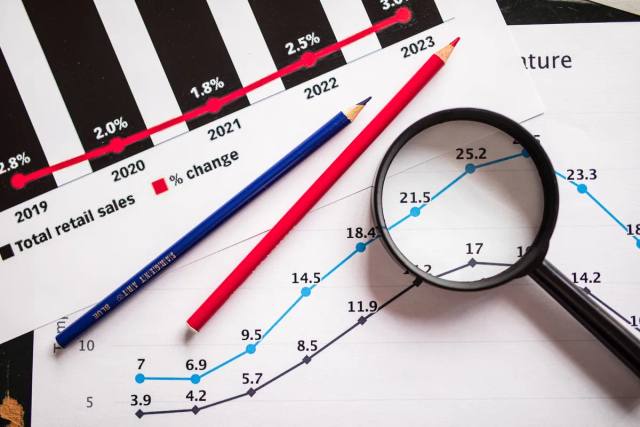
<p>HDB Financial Services, a non-banking financial company (NBFC) owned by HDFC Bank, is set to undertake a significant fundraising initiative. The company has announced plans to raise a substantial amount of Rs 15,000 crore through non-convertible debentures (NCDs) and an additional Rs 500 crore through subordinated bonds. This move is strategically aimed at supporting the expansion of its loan book, a critical component of its growth strategy.</p> <p>In recent times, HDB Financial Services has demonstrated remarkable growth in the retail financing sector. As of June 30, the company's overall loan portfolio has witnessed a robust increase of 22 percent. This surge has elevated the loan portfolio to Rs 56,287 crore, up from Rs 45,889 crore recorded a year ago. This growth trajectory underscores HDB Financial Services' strong position in the market and its ability to effectively meet the rising demand for retail financing.</p> <p>The decision to raise funds through NCDs and subordinated bonds is a testament to the company's proactive approach to capital management. NCDs, being debt instruments, offer a fixed rate of return and are a preferred choice for companies looking to raise funds without diluting equity. The addition of subordinated bonds in the fundraising mix further diversifies the company's capital structure, providing a cushion to absorb losses and protect other creditors in case of financial distress.</p> <p>This fundraising initiative is particularly significant in the current economic climate, where the NBFC sector is navigating through various challenges. By securing additional capital, HDB Financial Services is not only looking to expand its loan book but also to strengthen its financial foundation. This move is expected to enhance the company's lending capacity, allowing it to cater to a broader customer base and tap into new market segments.</p> <p>Moreover, the expansion of the loan book is likely to contribute positively to HDB Financial Services' overall profitability and market presence. By increasing its lending capabilities, the company can capitalize on emerging opportunities in the retail financing sector, which remains a key driver of economic growth in India.</p> <p>In conclusion, HDB Financial Services' decision to raise Rs 15,000 crore via NCDs and Rs 500 crore through subordinated bonds marks a strategic step in bolstering its financial position and expanding its loan portfolio. As the company embarks on this ambitious journey, it is poised to reinforce its role as a leading player in the NBFC sector and contribute significantly to the retail financing landscape in India</p>
Unlisted Indian companies could soon find it easier to raise capital overseas through depository receipts. The Securities and Exchange Board of India (Sebi) is planning a liberalized regime for the issue of global depository receipts (GDRs) and American depositary receipts (ADRs) that will help startups and others raise funds, said two people with the direct knowledge of the matter. Currently, only listed companies can issue the instruments. The regulator is also expected to ease norms pertaining to two-way fungibility — conversion of shares to depository receipts and vice versa. FM Nirmala Sitharaman had announced last week that Sebi will soon operationalize the Depository Receipt Scheme 2014, a framework that was approved five years ago but hasn’t been implemented. <div> <div><span style="font-size: 14pt;"><a style="color: #ff6600; text-decoration: underline;" href="//economictimes.indiatimes.com/articleshow/70868231.cms?utm_source=contentofinterest&utm_medium=text&utm_campaign=cppst">Click here to read more</a></span></div> </div>
Indicative prices, company research and your enquiries — in your pocket. Get price notes on the names you follow and reach our team from anywhere.