Blogs, insights, guides and videos on India's unlisted market — all in one place.

Incorporated in December 1995, Xerox India Limited is engaged in the business of trading xerographic equipment, multifunction devices, laser printers, systems, consumables, paper, and providing after-sales services of machines sold which include servicing, repairing, and selling spare parts. Xerox India reported a net loss of Rs 12.92 crore in the financial year 2020-21. The company was in the black in the previous fiscal as it reported a net profit of Rs 11.89 crore. The company's income from operations declined almost one-third or 31.5% to Rs 324.97 crore in the FY2020-21 as against total revenue of Rs 474.45 crore in the previous fiscal. The bottom line and the top line of the company have been bleeding heavily due to the financial crunch, thanks to the lockdowns and restrictions shutting the offices nationwide and those open, are working with limited capacity. The company is going to hold its 25th Annual General Meeting (AGM) on September 15, 2021, Wednesday at Grand Ball Room II, Radisson Gurugram Sohna Road City Center, Gurugram, Haryana, India, at 12.00 noon. The company board will meet to consider and approve the financial results for the financial year 2020-21 and restructure its board and take on other routine issues. Despite a one-fourth fall in the expenses to Rs 346.98 crore, the company could not report a profit in the financial year ended on March 31, 2021. The company had reported a net profit of Rs 14 crore in the year-ago period. The earning per share (EPS) of the company's shares, with a face value of Rs 10 each, turned negative to 2.87 below zero from a positive of 3.19 in the period under review. The company has been constantly giving a hefty dividend for the last five years. However, considering the grim conditions due to the coronavirus pandemic, it is proposed not to recommend a dividend for the financial year ended March 31, 2021. The Gurugram based company is a public limited entity, ultimately controlled by Xerox Holdings Corporation, USA. The primary offerings span three main areas- Managed Document Services, Workplace Solutions, and Graphic Communications. The company provides efficient and effective printing and workflow solutions to its customers. It supports them via workplace solutions and graphic communications products. The company has a strong product portfolio of Desktop Printer, Office Printers, Multifunction, ConnectKey Technology, Scanners, Office Softwares, Small and Medium Business, and App Gallery.

These days, the companies are keen to get themselves listed on the bourses, filing DRHPs every other day. However, do you know many companies follow the reverse of it and get themselves delisted? In such cases, companies want to stop their shares from trading in the market. Delisting of equity shares from a stock exchange is exactly the opposite of listing of shares. The company promoters take off their shares from the exchanges so that they are not traded on exchanges further. For example, Vedanta Resources is trying to delist its flagship firm Vedanta from the exchanges. Vedanta, one a bluechip name, is heavily traded on both the stock exchanges. The delisting plan of Vedants is being done to simplify the complex business structure of the company. However, existing investors, including the LIC of India, are not very keen to give their stake at lower prices. <strong>What is delisting?</strong> Delisting of the shares refers to the complete and permanent removal of equity shares of a company from the stock exchanges for buying or selling purposes. This simply means that the shares will not be available to buy or sell on the stock exchanges, i.e., BSE or NSE. Just like the listing process, the complete procedure of delisting is governed by the market's regulator Sebi. <strong>Reasons for delisting</strong> Just like there are multiple reasons for getting a company listed on the bourses, the reasons to get it delisted from the stock exchanges are numerous too. A company plans for delisting its share from exchanges for various reasons, of which, major includes insufficient market capitalization, stock prices not matching a particular level, company filing for bankruptcy, failure to comply with regulatory norms, or merger and acquisition by some other player. <strong>There are two types of delisting- Voluntary and Compulsory.</strong> In voluntary delisting, a company decides on its own to remove its securities from a stock exchange whereas in compulsory delisting, the securities of a company are removed from a stock exchange as a penal measure for not making submissions or complying with various requirements set out in the Listing agreement within the time frames prescribed. <strong>What is the delisting mechanism?</strong> Sebi, under its rules and regulations, provides an exit mechanism to the existing shareholders in the following manner: Voluntary delisting whereby the exit price is determined through the Reverse Book Building process- The floor price is calculated in accordance with the regulations and the shareholders have to make a bid at a price either on or above the floor price. The exit price would be decided on the basis of bidding by the public shareholders. If the exit price so determined is acceptable to the promoter, the promoter pays that price to the investors, and the investors can exit. Those investors who do not participate in the Reverse Book Building process have an option to offer their shares for sale to the promoters. The promoters are under an obligation to accept the shares at the same exit price. This facility is usually available for a period of at least one year from the date of closure of the delisting process. To get the company delisted, at least 90 percent of the non-promoter shareholding shall be tendered by the shareholders. <strong>Voluntary Delisting for a small company-</strong> Any company with paid-up capital of less than Rs. ten crore and net worth less than Rs 25 crore, whose equity shares have not been frequently traded on any recognized stock exchange for a period of one year and has not been suspended for any non-compliance in the preceding one year would not be required to follow the Reverse Book Building process. In such cases, the promoter decides the exit price in consultation with the merchant banker. The promoter writes to all public shareholders informing the proposal for delisting. Once the requisite consent is received, the promoter makes payment of consideration for the same and the shareholders can exit. <strong>Involuntary or Compulsory delisting -</strong> refers to the formal removal of listed company shares from the stock exchange for various reasons like non-compliance with the listing guidelines. In such cases, promoters are asked to buy back the shares at the value determined by an independent evaluator. Note: A company that delists its equity shares from a recognized stock exchange but continues to remain listed on another recognized stock exchange would not be required to provide an exit opportunity to its shareholders provided the equity shares remain listed on any recognized stock exchange which has nationwide trading terminals. <strong>Is a comeback possible?</strong> Of course, a delisted stock can make a comeback and get relisted but there are strict guidelines. Sebi has a different set of rules for re-listing of the delisted companies. If a company is voluntarily delisted, it can be relisted only after five years or more from the date of its delisting. In the case of compulsory delisting, the company has to wait for at least 10 years. <strong>What happens to the delisted shares?</strong> Delisted shares can either be gain or pain for the investor, depending on the reason and process of delisting. If a stock is getting delisted, it is very crucial to analyze the reason for the same, before taking a decision to hold or sell it. Do investors benefit from the delisting of the shares? Probably, No. If the company or promoters are benefiting from the delisting of shares, in most of the cases, the answer is yes. There are certain rules and regulations that a company has to follow to safeguard the interest of the investors. Delisted companies do not have to follow these norms. One thing is very clear if a company is voluntarily delisted, there is something 'phishy' behind it. It is a common perception. However, if the company is compulsorily delisted, then definitely it is not following the listing norms. In both cases, investors lose money as such companies delist their equity at dirt cheap prices, most of the time. In many cases, shares of delisted companies have vanished from the Demat account of shareholders and investors lose all the money overnight. However, if the company is delisted and investors do not tender their shares, such stocks can be traded in the unlisted markets. The off-market is a good option for the investors to deal in such counters if the stocks are not written off from their Demat account. <strong>Is delisting penal?</strong> Voluntary delisting may not happen overnight. Though it gives room to investors to offload their stake at a particular price. If an investor continues to hold their stocks post-delisting, they still owe the legal and beneficial ownership rights over the stocks. However, if the delisting is compulsory, then whole-time directors, promoters, and group firms get debarred from accessing the securities market for 10 years from the date of compulsory delisting. Promoters of the delisted companies are required to purchase the shares from public shareholders as per the fair value determined by an independent valuer.

The inquiry is extremely straightforward and the response to this is more basic, simply a word, Yes. In any case, not all things are so smoothed out into the cycle that you can purchase pre-IPO equity very much like leafy foods in the city. For any organization, equity share capital is a standout amongst other approaches to raise finances that can be utilized for scaling, development, and advancement. At the point when an organization records itself on the stock trade, it turns into a traded on an open market organization. The equity portions of the organization get listed on the BSE as well as NSE, where they are openly tradable across retail and institutional investors. In the event that you put resources into the portions of a listed organization, you buy those listed shares. Yet, what might be said about the organizations, which were not listed? As a matter of fact, the other classification of the organizations likewise offers share cash-flow to the investors, which are known as unlisted shares. The other name for unlisted shares is pre-IPO equity as they are given by the organization to investors before their IPO. For Example, investors can purchase unlisted shares of Reliance Retail, OYO, Paytm (One97 interchanges) among others. Since unlisted shares are not listed or exchanged on any of the stock trades, investors would need to put resources into these shares through other non-regular modes, for example, vendors and representatives managing in such values. There are distinctive manners by which you can purchase unlisted shares of an organization. Nonetheless, before we dive into the methods of purchasing unlisted shares, we should comprehend the various parts of putting resources into them. <strong>For what reason do unlisted shares draw in investors?</strong> The organization issues shares to investors during the beginning phase, particularly when it is developing. Organizations, with creative thoughts and new innovation, produce income and can grow up to become set up players. For instance, Paytm is the key installment entryway and fintech player, though Ola is a taxi aggregator. Both of the new companies have acquired a tremendous transformation of people, upsetting the big deal change. Those investors, who wish to turn into a piece of such organizations at a beginning phase, head to an unlisted market. Be that as it may, not every one of the organizations is accessible in the unlisted market, and not every person can purchase these shares. Another central justification for putting resources into unlisted shares of an organization is that a couple of them are sponsored by solid parentage or are a piece of a major aggregate. For instance, Reliance Retail is a piece of Reliance Industries and HDB Financial Services is an arm of the HDFC bunch. On the off chance that investors accept that such auxiliaries will be a major achievement like their folks and anticipate that they should post solid returns, later on, they put resources into such unlisted shares. Putting resources into inventive and new organizations that have a ton of possibilities, investors decide to put resources into unlisted shares. <strong>Should know things about unlisted shares</strong> unlisted shares in India are extremely not the same as the listed shares yet putting resources into them requires a ton of schoolwork. Here are a couple of featured discussions prior to making a stride ahead: <strong>The interaction of venture:</strong> While purchasing listed shares incorporates a fast buy through the Demat account inside exchanging hours, putting resources into unlisted shares is a tiny bit troublesome. It requires some investment and you probably won't have the option to purchase an unlisted share in a split second. <strong>The installment:</strong> The installment should be done from the financial balance of the Demat account holder. It is an obligatory advance to wipe out the odds of tax evasion and other ill-conceived exercises. <strong>Desk work:</strong> Various organizations require a great deal of administrative work to designate your offers and notwithstanding consummation of documentation, a portion of offers isn't an assurance. Portions of the National Stock Exchange (NSE) are one such huge model. <strong>Size of Investment:</strong> Unlike listed business sectors, investors can not accept a few unlisted shares. There is a base ticket size for each share. Be that as it may, the retail ticket size isn't exceptionally large however it is sufficiently large to legitimize the exchange cost. <strong>Who owns the shares?</strong> Usually, unlisted shares are claimed by workers of the organizations, private supporters, financial speculators or new businesses and mediators. They offload their stake in the open market to sell their positions, which requires an unpredictable mode or market for such shares. <strong>Liquidity:</strong> Finding purchasers for unlisted shares is relatively troublesome as there are liquidity issues. Be that as it may, the new interest in such stocks has made them effectively tradable. <strong>Hazard Element:</strong> unlisted shares are more hazardous contrasted with listed shares. This is principally on the grounds that the shares have a place with organizations that are in their development stages. Such organizations may experience extensive misfortunes in a terrible stage making unlisted shares dangerous. <strong>Valuation of the shares:</strong> Since the shares are not listed on the stock trade, there is no reasonable equity system. The worth is totally controlled by the interest and supply of the shares. Such a worth probably won't be truly solid thus, it may end up being unsafe. <strong>Straightforwardness:</strong> There is restricted or no straightforwardness in the organization's monetary position that offers unlisted shares. In this way, additional endeavors are required. <strong>How to purchase unlisted shares?</strong> We should dig once again into the diverse manners by which you can purchase unlisted shares, which can be both of the accompanyings: <strong>Through vendors or new companies:</strong> Specialized new businesses have been made to bring to the table interests into unlisted shares. You can purchase unlisted shares through these new companies by opening a Demat account with them. Typically, base speculation of Rs.50, 000 is expected to put resources into the unlisted portion of each organization. You need to make the speculation forthright yet the conveyance of the shares is done based on T+3, that is, following three days of installment. You need to move the sum for purchasing the shares however the conveyance of the equivalent isn't ensured on the spot. It could be sooner than three days too. Since the conveyance is done following a couple of days, there is a counterparty hazard implied in purchasing unlisted shares through this mode. Be that as it may, not every person in the business is a fraudster. A large number of them are extremely useful names. <strong>From the representatives of the organization:</strong> Start-ups, while recruiting workers, typically share Employee Stock Ownership Plans (ESOPs). This permits workers to have equity proprietorship in the organization that they join. ESOPs permit workers to purchase portions of the organization at not really set in stone cost and after a predefined time. Along these lines, assuming the workers need to make their unlisted shares available for purchase, you can purchase the shares from them. To purchase shares from them, you contact the specialist. Your intermediary knows which unlisted shares come available to be purchased and can help you purchase the shares from workers making their stake available for purchase. <strong>From the advertisers of the organization:</strong> On many occasions, the advertisers place their stake in the organization available to be purchased. This is done through an interaction called Private Placement and the unlisted shares are put with banks and abundance supervisors. You can, then, at that point, put resources into unlisted shares through Private Placements done by the organization's advertisers. In any case, the cost for such a position is exceptionally high and you need a substantial sum to contribute. <strong>By putting resources into AIF:</strong> If you are a huge financial backer, hoping to put a lot of cash in PMS (Portfolio Management Services) or AIF (Alternative Investment Funds), you can get unlisted shares. Monetary establishments that deal with a PMS or AIF plot, as a rule, put resources into unlisted shares. These organizations bank on the pre IPO share valuation to acquire returns when the organization records itself and dispatches its IPO. Since the pre-IPO valuation is lower, PMS and AIF reserves get an enormous number of offers and create benefits when the valuation ascends because of a resulting IPO. PMS and AIF are specialty speculation classifications for HNIs, NRIs, and unfamiliar investors since they include a lot of assets. This model is reasonable for you just in case you are an enormous investor and wouldn't fret about facing the challenge. Besides, however, store administrators bank upon the increment in the valuation of shares after the IPO is dispatched, their call isn't generally right on target. A similar danger lied with other dynamic common assets too. Now and again, the organization's valuation may experience after it turns into a freely listed organization and the unlisted shares costs may fall causing misfortunes. In this way, remember the dangers while thinking about PMS and AIF and putting a huge piece of cash in unlisted shares. <strong>Crowdfunding stages:</strong> There are different crowdfunding stages that permit you to put resources into the equity capital of unlisted organizations. One can turn into a private backer, put resources into heavenly messenger assets and purchase unlisted shares of organizations enrolled on such stages. At the point when you put resources into the business through crowdfunding, you are helping the undertaking startup. It implies an impressive danger if the endeavor comes up short or can't build up itself. <strong>Errors to keep away from</strong> Regardless of whether it is a listed or unlisted market, if you don't watch out, you may wind up committing misfortunes because of some terrible errors. Such missteps would be exorbitant as you would impede your capital, bring about promising circumstance costs and even cause misfortune if the offers are degraded. <strong>*</strong> Do not follow the crowd mindset. Get your work done and research well about the organization prior to contributing. <strong>*</strong> If you are getting shares at extremely low rates, don't seize the opportunity. There may be a justification for existing investors taking an exit at lower costs. <strong>*</strong> Price changes of unlisted shares are impressively high. In the event of significant variances, evaluate the reasonable worth of the offer dependent on the organization's possibilities. <strong>*</strong> Do not put resources into unlisted shares with a transient venture skyline. Keep in mind, unlisted shares demonstrate their guts with time when the organization develops and sets up itself on the lookout. Have persistence and a drawn-out point of view. <strong>*</strong> Do not put resources into unlisted shares without a confided in a counselor to direct you. On the off chance that you need warning administrations, you can reach out to a large number of the rumored names which will help

<strong>Resins and Plastics Ltd</strong>. (RPL) is one of India’s leading Synthetic Resin manufacturers catering to a wide range of industries today such as Adhesives, Coatings, Printing Inks, Insulating Varnishes, Wire Enamels, Lamination, Construction, Cosmetics, Textiles, and Foundries. RPL commenced its operations in 1971 for manufacturing Alkyd Resins, Epoxy Resins, Foundry Resins, Ketonic Resins, and Phenolic Resins some of which are import substitutes. RPL’s manufacturing facilities are located at MIDC, Taloja in Maharashtra and GIDC, Ankleshwar in Gujarat, both of which are in close proximity to the shipping ports. RPL’s strength lies in its manufacturing and strong distribution network that spans across India. RPL has its own sales offices and branches across the country and also deals through a few major distributors across different regions.<!--more--> <strong>Operation Performance of Resin and Plastic Annual Report 2021</strong> 1. Despite COVID-19, during the financial year 2020-21, revenue from operations increased to 145 Crores as against 138 Crores, an overall growth of 5%. 2. The Profit after Tax for the current year is 12 Crores as against 8.57 Crores in the previous year 2019-20, an overall growth of 36%. 3. In FY20-21, NCL has approved the amalgamation of Pragati Chemicals into Resin and Plastics. Under this scheme, Resin and Plastics had allotted 6,00,000 Equity Shares of 10 each in the ratio of 5 (Five) equity shares for every 3 (Three) share held by shareholders of Pragati Chemicals Limited on 3rd September, 2020 pursuant to the scheme of amalgamation. 4. Resin and Plastics has given dividend of Rs.5.50 per share in FY20-21. 5. Trade Receivables has gone up from 30 Crores to 41 Crores. Due to which the cash flow from operations has become negative in FY20-21 which is negative for the business. <strong>Valuation of Resin and Plastic Unlisted Share?</strong> Total Outstanding Shares = 41,72,300 Unlisted Share Price = 325 Mcap = 135 Crores EPS = 28 P/E = 11x Mcap/Sales = <1

<div class="gmail_default">Elofic Industries, one of India's largest filter manufacturing companies producing a complete range of filters and lubricants, has come up with its annual results. The Faridabad-based auto ancillary has reported a sharp growth of 71.6% in the net profit to Rs 30.96 crore in the financial year ended on March 31, 2021. The company had reported a net profit or profit after tax (PAT) of Rs 18.04 crore in the previous year. The company reported an income of operations soared 21.97% to Rs 266.61 crore during the year ended on March 31, 2021, from Rs 218.58 crore in the previous year. Incorporated in 1973, Elofic Industries boasts a strong domestic and international clientage, which are the most trusted brands and pioneers in their industries. Among the domestic clients, the company has Maruti Suzuki, Tata Motors, Mahindra & Mahindra, Volvo Eicher Commercial Vehicles, Renault Nissan Mitsubishi Alliance (India), JCB India, Bosch, Action Construction, VST Tillers and Escorts on the board. Among the global and international clients, the company exports to Agro Tractors and Lombardini in Italy; Wabco in Germany; and Kohler Engines, Kawasaki Motors, Briggs and Stratton, and Generac Power Systems in the United States. However, the total expenses of the company jumped 14.29% to Rs 226.04 crore from Rs 197.77 crore during the period under review. The company reported a 72.31% growth in the profit before tax (PBT) to Rs 42.27 crore in FY 2020-21, compared to Rs 24.53 crore in FY 2019-20.</div> <div class="gmail_default"></div> <div class="gmail_default">Being one of India’s largest OEM suppliers, Elofic has a responsibility to deliver the best quality and high performance-driven products to its wide diversity of clientele perpetually. With an annual production capacity of over 85 million filters presently, it envisions to excel and manufacture 200 million units by 2020. The company has reported earning per share (EPS) of 123.44 in the financial year 2020-21, which was 71.92 in the FY 2019-20. Elofic provides a complete range of filters and lubricants. The company marks its presence in multiple states of India with half a dozen manufacturing facilities in Faridabad (Haryana), Nalagarh (Himachal Pradesh), and Hosur (Tamil Nadu). Promoters of Elofic, Mohan Bir Sahni and Kanwal Deep Sahni, owe over 58% stake in the company. It has a wholly-owned subsidiary in the United States named Elofic USA, LLC.</div>
The question is very simple and the answer to this is more simple, just a word, Yes. However, not everything is so streamlined into the process that you can buy pre-IPO equity just like fruits and vegetables on the street. For any company, equity share capital is one of the best ways to raise funds that can be used for scaling, growth, and development. When a company lists itself on the stock exchange, it becomes a publicly traded company. The equity shares of the company get listed on the BSE and/or NSE, where they are freely tradable across retail and institutional investors. If you invest in the shares of a listed company, you purchase those listed shares. But what about the companies, which were not listed? Actually, the other category of the companies also offers share capital to the investors, which are known as unlisted shares. The other name for unlisted shares is pre-IPO equity as they are issued by the company to investors before their IPO. For Example, investors can buy unlisted shares of Reliance Retail, OYO, Paytm (One97 communications) among others. Since unlisted shares are not listed or traded on any of the stock exchanges, investors would have to invest in these shares through other non-conventional modes such as dealers and brokers dealing in such equities. There are different ways in which you can buy unlisted shares of a company. However, before we delve into the ways of buying unlisted shares, let’s understand the different aspects of investing in them. <strong>Why do unlisted shares attract investors?</strong> The companies issue shares to investors during the early stage, especially when it is growing. Companies, with innovative ideas and new technology, generate revenue and can grow up to become established players. For example, Paytm is the key payment gateway and fintech player, whereas Ola is a cab aggregator platform. Both of the startups have brought a huge change in people's life, revolutionizing the big-time change. Those investors, who wish to become a part of such companies at an early stage, head to an unlisted market. However, not all the companies are available in the unlisted market and not everyone can buy these shares. Another big reason for investing in unlisted shares of a company is that a few of them are backed by strong parentage or are a part of a big conglomerate. For example, Reliance Retail is a part of Reliance Industries and HDB Financial Services is an arm of the HDFC group. If investors believe that such subsidiaries will be a big success like their parents and expect them to post strong returns in the future, they invest in such unlisted shares. Investing in innovative and new businesses that have a lot of potentials, investors choose to invest in unlisted shares. <strong>Must know things about unlisted shares</strong> Unlisted shares in India are not very different from the listed shares but investing in them requires a lot of homework. Here are a few keynotes before taking a step ahead: <strong>The process of investment:</strong> While buying listed shares includes a quick purchase through the Demat account within trading hours, investing in unlisted shares is a tad bit difficult. It takes some time and you might not be able to buy an unlisted share instantly. <strong>The payment:</strong> The payment needs to be done from the bank account of the Demat account holder. It is a mandatory step to eliminate the chances of money laundering and other illegitimate activities. <strong>Paper Work:</strong> Various companies require a lot of paperwork to allot your shares and despite completion of documentation, allotment of shares is not a guarantee. Shares of the National Stock Exchange (NSE) are one such big example. Size of Investment: Unlike listed markets, investors can not buy a small number of unlisted shares. There is a minimum ticket size for every share. However, the retail ticket size is not very big but it is big enough to justify the transaction cost. <strong>Who owns the shares?</strong> More often than not, unlisted shares are owned by employees of the companies, angel investors, venture capitalists or startups and intermediaries. They offload their stake in the open market to liquidate their positions, which requires an unconventional mode or market for such shares. <strong>Liquidity:</strong> Finding buyers for unlisted shares is comparatively difficult as there are liquidity issues. However, the recent interest in such stocks has made them easily tradable. <strong>Risk Element:</strong> Unlisted shares are riskier compared to listed shares. This is primarily because the shares belong to companies that are in their growth stages. Such companies might suffer considerable losses in a bad phase making unlisted shares risky. <strong>Valuation of the shares:</strong> Since the shares are not listed on the stock exchange, there is no fair price mechanism. The value is completely determined by the demand and supply of the shares. Such a value might not be very reliable and so, it might prove to be risky. Transparency: There is limited or no transparency in the company’s financial position that offers unlisted shares. Thus extra efforts are needed. <strong>How to buy unlisted shares?</strong> Let’s delve back into the different ways in which you can buy unlisted shares, which can be either of the following: Through dealers or start-ups: Specialized start-ups have been created to offer investments into unlisted shares. You can buy unlisted shares through these start-ups by opening a Demat account with them. Usually, a minimum investment of Rs.50, 000 is needed to invest in the unlisted share of each company. You have to make the investment upfront but the delivery of the shares is done on the basis of T+3, that is, after three days of payment. You have to transfer the amount for buying the shares but the delivery of the same is not guaranteed on the spot. It may be earlier than three days as well. Since the delivery is done after a few days, there is a counterparty risk involved in buying unlisted shares through this mode. However, not everyone in the industry is a fraudster. Many of them are very helpful names. From the employees of the company: Start-ups, when hiring employees, usually offer Employee Stock Ownership Plans (ESOPs). This allows employees to have equity ownership in the company that they join. ESOPs allow employees to buy shares of the company at a pre-determined price and after a predefined time. So, if the employees want to offer their unlisted shares for sale, you can buy the shares from them. To buy shares from them, you contact the broker. Your broker knows which unlisted shares come up for sale and can help you buy the shares from employees offering their stake for sale. <strong> From the promoters of the company:</strong> Many times the promoters place their stake in the company for sale. This is done through a process called Private Placement and the unlisted shares are placed with banks and wealth managers. You can, then, invest in unlisted shares through Private Placements done by the company’s promoters. However, the price for such placement is very high and you need a heavy amount to invest. <strong>By investing in AIF:</strong> If you are a large investor, looking to invest a considerable amount of money in PMS (Portfolio Management Services) or AIF (Alternative Investment Funds), you can get unlisted shares. Financial institutions that manage a PMS or AIF scheme usually invest in unlisted shares. These institutions bank on the pre IPO share valuation to earn returns when the company lists itself and launches its IPO. Since the pre-IPO valuation is lower, PMS and AIF funds get a large number of shares and generate profits when the valuation rises due to a subsequent IPO. PMS and AIF are niche investment categories for HNIs, NRIs, and foreign investors since they involve a considerable amount of funds. This mode is suitable for you only if you are a large investor and don’t mind taking the risk. Furthermore, though fund managers bank upon the increase in the valuation of shares after the IPO is launched, their call is not always spot on. The same risk lied with other active mutual funds as well. In some cases, the company’s valuation might suffer after it becomes a publicly listed company and the unlisted shares prices might fall causing losses. So, keep the risks in mind when considering PMS and AIF and investing a large chunk of money in unlisted shares. <strong>Crowdfunding platforms:</strong> There are various crowdfunding platforms that allow you to invest in the equity capital of unlisted companies. One can become an angel investor, invest in angel funds and buy unlisted shares of companies registered on such platforms. When you invest in the business through crowdfunding, you are helping the business venture startup. It involves a considerable risk if the venture fails or is not able to establish itself. <strong>Mistakes to avoid</strong> Whether listed or unlisted market, if you are not careful, you might end up making losses due to some horrible mistakes. vSuch mistakes would be costly as you might block your capital, incur opportunity costs and even incur a loss if the shares are devalued. <strong>*</strong> Do not follow the herd mentality. Do your homework and research well about the company before investing. <strong>*</strong> If you are getting shares at very low rates, do not jump at the chance. There might be a reason for existing investors taking an exit at lower prices. <strong>*</strong> Price fluctuations of unlisted shares are considerably high. In case of major fluctuations, assess the fair value of the share based on the company’s prospects. <strong>*</strong> Do not invest in unlisted shares with a short-term investment horizon. Remember, unlisted shares prove their mettle with time when the company grows and establishes itself in the market. Have patience and a long-term perspective. <strong>*</strong> Do not invest in unlisted shares without a trusted advisor to guide you. If you need advisory services you can get in touch with many of the reputed names which will help you to reap high returns.

<div class="tatsu-module tatsu-inline-text clearfix tatsu-Bk7utDaAhd "> <div class="tatsu-inline-text-inner "> <p>Umesh Paliwal, Co-founder, UnlistedZone, said many investors used to see the one-year lock-in after IPO as a key risk to their investment. “The move is likely to increase the volume and number of participants in the market in coming days”.</p> </div> </div> <div class="tatsu-animated-link tatsu-animated-link-style4 tatsu-rJVOFDaCnd tatsu-module tatsu-animated-link-align-none "><a class="tatsu-animated-link-inner " href="http://ow.ly/1wG450FN3x8" target="_blank" rel="noopener" aria-label="Read Full Article Here"><span class="tatsu-animated-link-text">Read Full Article Here</span></a></div>
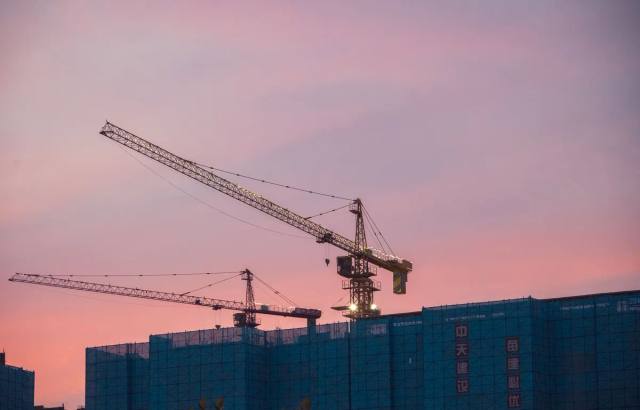
The consortium of NCL Industries Limited and NCL Buildtek Limited have been awarded a letter of acceptance (LoA) of bids aggregating to Rs 1,863.19 crore from the Andhra Pradesh State Housing Corporation Limited (APSHCL). The companies have been given an order for a supply of pre-painted (GI) steel window frames with glazed shutter and GI powder-coated door frames to APSHCL as a part of the scheme of the State Government of Andhra Pradesh. The State Government has implemented the scheme named "Navaratnalu-Pedal Andariki Illu" which is aimed to provide housing for all poor and lower-income groups. The consortium of the two players was selected after a rigorous bidding process followed by a reverse auction amongst shortlisted bidders. <strong>What is in the programme?</strong> The order is valued at over Rs 1,400 crore for 8.56 lakh units of window frames with shutters. They are supplied in the six districts of East and Wes, namely- Godavari, Krishna, Guntur, YSR Kadapa, and Ananthapuram. The other order, worth over Rs 460 crore is for the supply of 7.72 lakh door frames to the same set of Eastern and Western Districts of the state. NCL Buildtek Limited is the flagship company of the NCL Group, a prime realty group in South India, providing complete building-making solutions across the country. Secunderabad-based NCL Buildtek Limited is the Consortium leader and is engaged in the manufacture of profiles for pre-painted steel windows and shutters. In the official media statement released by the company, K Ravi, managing director of NCL Industries said "We are happy NCL Group is able to play a role in the flagship program 'Pedalandariki Illu' of the Andhra Pradesh government. Our goal for this project has been to keep the price affordable and provide a quality product." Adding to his vision, B Subba Raju, his counterpart in NCL Buildtek said, "We have started enhancing our manpower and manufacturing facilities to meet the tight delivery schedules. We are confident of meeting the tough timelines for executing the orders." NCL Buildtek Limited (erstwhile known as NCL Alltek & Seccolor Limited) is the sole licensee in India for ICP plasters and successfully completed many prestigious projects. It manufactures different grades and different finishes for interior and exterior applications like plain, granular, textured and other designer finishes to suit various tastes of Architects, Builders, and Interior Designers. In the pandemic hit the financial year 2020-21, the company reported a 7.5 percent fall in revenue to Rs 265 crore and a net loss of Rs 7 crore. In FY 2019-20, the company had posted a revenue of Rs 285 crore and a net profit of Rs 35 crore.

Unlisted share markets have gained popularity over the years in recent history. Investors with sound wisdom, strong financial health, and a long investment horizon buy stakes in growing companies, even before their IPO, and see the real magic of compounding. This has lured many new-age investors to head to the pre-IPO market, without proper knowledge and guidance and invest a big chunk in the unlisted. In this article, we will try to explain to you how an unlisted market actually works and how one should make the strategy to invest in this market. We will focus on the various dimensions of unlisted shares and their features so that it becomes easy for you to decide whether this market is for you or not. <strong>Key features of unlisted stocks:</strong> <strong>1. Not traded on Exchanges:</strong> Unlike the listed peers, shares of unlisted companies are not traded officially on a particular exchange. There is a separate market for this segment, where buyers and sellers operate via dealers. <strong>2. Dematerialized:</strong> Just like listed stocks, unlisted stocks are also transferred within your Demat account. One can check the status of the unlisted shares bought via the depository participant account, where they are available at face value. <strong>3. Price Mechanism:</strong> Unlisted markets are a pure game of supply and demand, which actually test the wisdom of an investor. Since the exchanges are not involved in this mechanism, the fair price discovery is always under scrutiny. The price of a share is fixed by mutual understanding between dealer and buyer. <strong>4.Growth factor:</strong> Unlisted markets enable investors to buy stakes in the company's which are either new in terms of technology or business model. Thus, the pricing is much more reasonable than the listed space. If you want to see the company evolve over a period of time, unlisted space is your cup of tea. <strong>5. Liquidity issue:</strong> More often than not, liquidity issues are a concern in unlisted markets. However, investors usually do not liquidate their position taken in an unlisted market. <strong>Who can invest in the Pre-IPO market?</strong> Earlier, only limited hands could buy pre-IPO equity stakes but now the stage is open for all. However, nothing is so easy for the smaller investors with limited capital as an investment even today, goes via multiple stages of funding and retail participants can only after a certain level. So when a business looks for funding in the initial stage, it goes through seed capital funds where global funds finance the company, backing their business idea. There are different types of seed funding which include series A, B, C, D, and thereon. Ant Financial, Softbank, Alibaba are prime examples of seed funding investors. After this angel investors and venture capital funds take a stake in the company, which is purely based on making profits. Then comes private equity, where retail investors can participate. They buy stakes at a higher valuation compared to early-stage investors in seed funding rounds. Thus, even if you are buying shares in an unlisted market, that does not mean that your cost of acquisition will be very less. Though it is highly possible that you may get stocks at cheap dirt valuations, but conservative pricing is not a guarantee. After private equity, companies generally look for primary markets and the stake is open for all. <strong>Types of unlisted stocks:</strong> There are three types of unlisted companies which are available in the unlisted space. Investors can look at the details for the same to understand the business prospects of the company: <strong>1. Parent Backed:</strong> Such companies are owned by a strong and renowned parentage, which is already listed on the stock exchanges. For example, Reliance Retail is the retail arm of Reliance Industries, HDB Financial Services is a subsidiary of HDFC group, Tata Technologies is backed by Tata Motors. <strong>2. New Age Companies:</strong> These are internet-based companies, which are often referred to as startups. Such companies are focused on niche segments like e-commerce, gaming, fintech, etc. OLA, Paytm, Nykaa, Mobikwik are key examples of the same. <strong>3. Independent Businesses:</strong> This segment includes the companies which have conventional business models without parentage. They are pure business players without being subsidiaries of any other listed entity. B9 Beverages, Bazaar India, Cochin International Airport, Hicks Thermometers are prime examples of them. <strong>Valuing the unlisted companies</strong> Since shares of unlisted companies are not freely traded on stock exchanges, there is no fair or exact market price. Instead, a fair value of the share is arrived at by buyers and sellers. There is no formal market for unlisted equities. Unlisted shares enter trading is usually done when there is diluted equity for sale by existing shareholders, promoters or employees of the company. Sometimes, promoters offload their stake for working capital requirements, without opting for private placements. While raising equity from private equity/strategic investors, the company is valued by these companies and can be used as a reference point. The prices of unlisted shares are initially fixed by the primary seller, based on the fundamentals and growth of the company and later on-demand and supply also play a vital role. <strong>Investing in unlisted space</strong> There are multiple ways of investing in the pre-IPO markets but all of them have their own pros and cons. Investors must factor in all before taking a call. <strong>1. From startups:</strong> Startups (which are not eyeing an IPO) offer their stake to private investors but their ticket size is very high. Investors usually need a fund of more than a crore INR to buy a stake in such companies and even then there is no surety of getting the desired stake. The cost of acquisition is very high. <strong>2. From employees:</strong> Investors can buy shares of an unlisted company from employees of the company, who have been offered stakes under ESOP schemes. This gives employees a decent opportunity to exit and liquidate their position and sell shares privately. <strong>3. From Promoters:</strong> Promoters of the company usually go to private places with banks, merchant bankers and wealth managers to offload their stake. However, there is a significant amount of stake, which is offloaded and shares are sold. <strong>4.</strong> <strong>From PMS/AIFs:</strong> Multiple wealth management companies are buying pre-IPO equities on behalf of their clients via PMS funds or alternative investment funds. However, their ticket size is quite big for a retail investor to participate in and the fee for management of funds is a big blow to your returns. <strong>5.</strong> <strong>From Crowd Funds:</strong> Individuals make an investment in a new business venture in exchange for common or preferred equity when it goes public. <strong>Comparative Analysis</strong> <strong>1.</strong> Taxation: Unlisted shares attract more taxation as investors have to pay 20% tax on the profit with indexation benefit in the off-market deals for holding the stake for more than two years. <strong>2.</strong> Process: Unlisted deals are more cumbersome, more paperwork is required in a few cases. There can be a delay in delivery. <strong>3.</strong> Due diligence: Unlisted companies demand more due diligence as there is no regulatory framework. Also, there is a lack of transparency in the financials of the companies. <strong>4.</strong> Risk: Unlisted market requires a high-risk appetite to reap higher rewards. <strong>5.</strong> Valuation: Unlisted markets give a scope of negotiation for pricing based on future earnings growth, right buying price etc. Professionally managed companies or companies having non-promoter institutional holding are seen as less risky bets. <strong>What should retail investors do?</strong> A retail investor should seek a strong balance between greed and fear while investing in unlisted stocks. One should allocate a small proportion of their wealth in the unlisted market. If an investor has excess surplus wealth, he can put a fair amount of shares in this space, but only after due diligence and risk assessment. An investor shall understand his investment horizon, goal, and objective of investment. Before making a random call in unlisted markets, one shall see tax liability and the dealer's commission as the brokerage is much higher in this space. If needed, investors can seek professional help as well. There is nothing wrong with trading unlisted shares. However, there are some unhealthy practices in this business. Just the kind of thing that needs regulatory attention before many small investors are misled into unsuitable investments.
<p>Power Transmission company Sterlite Power (SPTL) is gearing up for an IPO as the company has appointed Axis Capital and JM Financial to manage the issue, according to some media reports. Billionaire Anil Agarwal-led SPTL is planning to raise about Rs 2,500-3,000 crore via its primary offering in the ongoing financial year (FY 2021-22). The reports add that the company is expected to file its DRHP soon. <br /><br />The IPO will mainly consist of new shares, but existing stakeholders may offload their stake, as well. They may appoint more bankers as the IPO plans progress, the media reports suggested. Sterlite Power manufactures power products, and is in the business of power transmission, and offers solutions for problems of the intersection of time-space and capital.<br /><br />The company is likely to dilute its stake at a valuation of Rs 20,000 crore, which is a decent headroom for hefty upside for the company. Sterlite has approximately 13,500 circuit km of transmission lines. Sterlite Power is the second most prominent power transmission company of India after PowerGrid NSE and is ahead of Adani Transmission and Essel Group in terms of market share. <br /><br />Power-Grid has a market cap of Rs 1.2 lakh crore while Adani Transmission's m-cap stands at Rs 1 lakh crore after a 50 percent drop in the stock in the last few weeks. The Institute of Energy Economics and Financial Analysis (IEEFA), in a report released in February 2020, pegged Sterlite Power’s market share at 31.5% in terms of tariff. PowerGrid had a market share of 36%, and Adani Transmission less than 18%. Among the positives for the company, a strong corporate backing, robust order book in India and Brazil, 5G rollout, and power transmission infrastructure are included. <br /><br />Also, the company has been focusing on debt reduction and toppling growth via monetizing assets through INVIT's and other means. The company turned profitable in the financial year 2020-21 by reporting Rs 362.92 crore profit on a standalone revenue of Rs 2,933.85 crore. Consolidated profits for the year stood at Rs 869.77 crore. The company had announced an interim dividend of Rs 5.30 per share with a face value of Rs 2 apiece for the year. There are a few reports that the company may issue bonuses and split shares soon.</p>

<strong>Business profile of Ncl Buildtek Unlisted Share</strong> NCL BUILDTEK LTD is part of NCL Group comprises of ALLTEK & SECCOLOR DIVISIONS. Over period of time the product portfolio is expanded to AAC Blocks, Dry-Mix Mortars, Tile Adhesives & Flooring segments. To represent the company's entire portfolio the company is renamed as NCL BUILDTEK LTD. Today, NCL BUILDTEK LTD has four successful business verticals under its realm; NCL Coatings, NCL Windoors, NCL Wall Solutions and NCL Services. <ol> <li><strong>COATINGS DIVISION - </strong>NCL manufactures Putties, textures, wide range of emulsion paints.</li> <li> <strong>WINDOORS DIVISION - </strong>NCL manufactures colour coated GI windows, and over a period started manufacturing ABS Doors in collaboration with KOS, South Korea, uPVC Doors & Windows in collaboration with Veka AG, Germany, and high-end Aluminium Windows in partnership with SCHUCO, Germany.</li> <li><strong>WALLS DIVISION - </strong>NCL manufactures AAC BLOCKS, DRY-MIX Cement Mortars & Wide range of Tile Adhesives.</li> </ol> <strong>Financial Performance of NCL Buildtek in FY20-21</strong> 1. Due to COVID-19, the revenue has gone down from 285 Crores in FY19-20 to 265 Crores in FY20-21. 2. EBITDA has also reduced from 35 Crores to 20 Crores. 3. EBITDA margins has reduced from 13% to 7.5%. 4. PAT has gone into negative. In FY20-21 NCL Buildtek has registered a loss of 5.33 Crores. 5. Debt on the books has reduced from 113 Crores to 91 Crores in FY20-21, which is good sign. 6. Trade receivables has gone down from 108 Crores to 78 Crores in FY20-21. Due to this they have generated cash flow of 41Crores from operations. Reduction of receivables is very positive for the balance sheet of NCL Buildtek. <strong>Selling of NCL Pearl Building </strong> <div class="page" title="Page 5"> <div class="layoutArea"> <div class="column"> NCL Buildtek has sold NCl Pearl", Secunderabad with NCL Holdings (A& S) Limited on 26.03.2021 for a consideration of Rs. 3,53,00,000/- and the entire consideration has been received and physical possession also handed over. <a href="https://unlistedzone.com/storage/knowledge-logo/1625141871_Financial-Results-for-the-Quarter-ended-31st-March-2021-2.pdf">Financial Results of NCL Buildtek Unlisted Shares of FY20-21</a> </div> </div> </div>

Tata Technologies is a global engineering and product development digital services company focused on fulfilling its mission of helping the world drive, fly, build and farm by enabling its manufacturing customers across automotive, industrial machinery, aerospace and industrial verticals develop and realize better products and drive efficiencies in their businesses. They have recently published their Annual Report for FY20-21 and the main points from the annual report with regards to new business added , ESOPs, Financials and Valuation of Tata Technology is presented by UnlistedZone team.<!--more--> <strong>Key Takeaways from Annual Report 2021</strong> <strong>Deals pocket by Tata Technologies</strong> <strong>1.</strong> Launched an AUTOSAR (AUTomotive Open System ARchitecture) development center in India for GKN – a testament to the growing reputation that Tata Technology Unlisted Company is thriving in the fast-growing eMobility and embedded electronics space. <strong>2</strong>. Partnered with a North American original equipment manufacturer (OEM) to develop an SUV for the Chinese market – the largest automotive market in the world. <strong>3.</strong> Secured a multi-year PLM-enabled, digital thread engagement with a tier 1 automotive supplier. This solution enabled the digital representation of mechanical/electronic components and embedded software data to be linked with requirements, test and behavioral simulations, certifications, bill of materials (BOMs) and associated process plans. <strong>4.</strong> Rolled out the next-generation ERP solution for a North American Battery Electric Vehicle (BEV) company in support of its plans to launch multiple vehicles in the calendar year 2021. <strong>5.</strong> This year Tata Technology has secured a breakthrough deal with Government of Karnataka to modernize 150 Industrial Training Institutes (ITIs) across the state. The award was predicated upon Tata Technology proprietary i GET IT e-Learning platform and will necessitate the development of educational content in the areas of Smart Manufacturing and Industry 4.0. <strong>6.</strong> In the first quarter last year when Covid-19 hit the economy they lost 36% of the revenue. Despite the challenges faced in the first quarter, Tata Technology able to drive revenue and operating profit improvements in each of the subsequent quarters as market conditions recovered. <strong>ESOPs</strong> In FY20-21, two option grantees, who were vested with 3,750 options in the previous financial year, exercised their options. The exercise price for these options was Rs. 645 per share. <strong>Majority Shareholder</strong> Tata Motor is the biggest shareholder in Tata Technology. It holds 72.48% equity of Tata Technology Unlisted Share. <strong>Financial Performance of Tata Technologies</strong> <strong>1.</strong> The financial results in the fiscal 2021 were significantly impacted by COVID-19 and the revenue has declined to 2400 Crores from 2800 Crores last year. A fall of 16% in FY20-21. <strong>2.</strong> PAT decreased by 4.9% to 239.18 crore in financial year 2020-21 compared to 251.55 crore in previous financial year. <strong>3.</strong> Despite struggle in FY20-21, the company has managed to stay float and as per management commentary, in FY22 they have such an order book that they ever had in their lifetime. <strong>Valuation of Tata Technologies</strong> Currently, Tata Technologies Unlisted Share Price is 2800 per share. Average EPS of last 3 years = 66 per share P/E = 42x If we see the listed market and compare with IT companies such as; Infosys is currently trading at P/E of 33x. TCS is currently trading at P/E of 33x. So, currently it looks over valued in the unlisted market. <strong>Last 5 years performance of Tata Technologies</strong> <div class="table-overflow-init"> <table dir="ltr" border="1" cellspacing="0" cellpadding="0"><colgroup> <col width="100" /> <col width="100" /> <col width="100" /> <col width="100" /> <col width="100" /> <col width="100" /> <col width="100" /> <col width="100" /> <col width="100" /></colgroup> <tbody> <tr> <td data-sheets-value="{"1":2,"2":"Year"}">Year</td> <td data-sheets-value="{"1":2,"2":"Revenue"}">Revenue</td> <td data-sheets-value="{"1":2,"2":"PAT"}">PAT</td> <td data-sheets-value="{"1":2,"2":"OPM"}">OPM</td> <td data-sheets-value="{"1":2,"2":"NPM"}">NPM</td> <td data-sheets-value="{"1":2,"2":"EPS"}">EPS</td> <td data-sheets-value="{"1":2,"2":"ROE"}">ROE</td> <td data-sheets-value="{"1":2,"2":"ROCE"}">ROCE</td> <td data-sheets-value="{"1":2,"2":"D/E"}">D/E</td> </tr> <tr> <td data-sheets-value="{"1":2,"2":"2015-16"}">2015-16</td> <td data-sheets-value="{"1":3,"3":2712}">2712</td> <td data-sheets-value="{"1":3,"3":384}">384</td> <td data-sheets-value="{"1":3,"3":0.195}" data-sheets-numberformat="{"1":3,"2":"0.00%","3":1}">19.50%</td> <td data-sheets-value="{"1":3,"3":0.142}" data-sheets-numberformat="{"1":3,"2":"0.00%","3":1}">14.20%</td> <td data-sheets-value="{"1":3,"3":91.43}">91.43</td> <td data-sheets-value="{"1":3,"3":0.276}" data-sheets-numberformat="{"1":3,"2":"0.00%","3":1}">27.60%</td> <td data-sheets-value="{"1":3,"3":0.2656}" data-sheets-numberformat="{"1":3,"2":"0.00%","3":1}">26.56%</td> <td data-sheets-value="{"1":3,"3":0.28}">0.28</td> </tr> <tr> <td data-sheets-value="{"1":2,"2":"2016-17"}">2016-17</td> <td data-sheets-value="{"1":3,"3":2832}">2832</td> <td data-sheets-value="{"1":3,"3":350}">350</td> <td data-sheets-value="{"1":3,"3":0.1867}" data-sheets-numberformat="{"1":3,"2":"0.00%","3":1}">18.67%</td> <td data-sheets-value="{"1":3,"3":0.1236}" data-sheets-numberformat="{"1":3,"2":"0.00%","3":1}">12.36%</td> <td data-sheets-value="{"1":3,"3":83.33}">83.33</td> <td data-sheets-value="{"1":3,"3":0.246}" data-sheets-numberformat="{"1":3,"2":"0.00%","3":1}">24.60%</td> <td data-sheets-value="{"1":3,"3":0.322}" data-sheets-numberformat="{"1":3,"2":"0.00%","3":1}">32.20%</td> <td data-sheets-value="{"1":3,"3":0.1}">0.1</td> </tr> <tr> <td data-sheets-value="{"1":2,"2":"2017-18"}">2017-18</td> <td data-sheets-value="{"1":3,"3":2777}">2777</td> <td data-sheets-value="{"1":3,"3":245}">245</td> <td data-sheets-value="{"1":3,"3":0.1519}" data-sheets-numberformat="{"1":3,"2":"0.00%","3":1}">15.19%</td> <td data-sheets-value="{"1":3,"3":0.0882}" data-sheets-numberformat="{"1":3,"2":"0.00%","3":1}">8.82%</td> <td data-sheets-value="{"1":3,"3":58.37}">58.37</td> <td data-sheets-value="{"1":3,"3":0.158}" data-sheets-numberformat="{"1":3,"2":"0.00%","3":1}">15.80%</td> <td data-sheets-value="{"1":3,"3":0.223}" data-sheets-numberformat="{"1":3,"2":"0.00%","3":1}">22.30%</td> <td data-sheets-value="{"1":3,"3":0.04}">0.04</td> </tr> <tr> <td data-sheets-value="{"1":2,"2":"2018-19"}">2018-19</td> <td data-sheets-value="{"1":3,"3":2984}">2984</td> <td data-sheets-value="{"1":3,"3":352}">352</td> <td data-sheets-value="{"1":3,"3":0.18}" data-sheets-numberformat="{"1":3,"2":"0%","3":1}">18%</td> <td data-sheets-value="{"1":3,"3":0.12}" data-sheets-numberformat="{"1":3,"2":"0%","3":1}">12%</td> <td data-sheets-value="{"1":3,"3":83.61}">83.61</td> <td data-sheets-value="{"1":3,"3":0.2}" data-sheets-numberformat="{"1":3,"2":"0%","3":1}">20%</td> <td data-sheets-value="{"1":3,"3":0.2675}" data-sheets-numberformat="{"1":3,"2":"0.00%","3":1}">26.75%</td> <td data-sheets-value="{"1":3,"3":0}">0</td> </tr> <tr> <td data-sheets-value="{"1":2,"2":"2019-20"}">2019-20</td> <td data-sheets-value="{"1":3,"3":2896}">2896</td> <td data-sheets-value="{"1":3,"3":252}">252</td> <td data-sheets-value="{"1":3,"3":0.18}" data-sheets-numberformat="{"1":3,"2":"0%","3":1}">18%</td> <td data-sheets-value="{"1":3,"3":0.1077}" data-sheets-numberformat="{"1":3,"2":"0.00%","3":1}">10.77%</td> <td data-sheets-value="{"1":3,"3":60}">60</td> <td data-sheets-value="{"1":3,"3":0.16}" data-sheets-numberformat="{"1":3,"2":"0%","3":1}">16%</td> <td data-sheets-value="{"1":3,"3":0.289}" data-sheets-numberformat="{"1":3,"2":"0.00%","3":1}">28.90%</td> <td data-sheets-value="{"1":3,"3":0}">0</td> </tr> <tr> <td data-sheets-value="{"1":2,"2":"2020-21"}">2020-21</td> <td data-sheets-value="{"1":3,"3":2426}">2426</td> <td data-sheets-value="{"1":3,"3":239}">239</td> <td data-sheets-value="{"1":3,"3":0.181}" data-sheets-numberformat="{"1":3,"2":"0.00%","3":1}">18.10%</td> <td data-sheets-value="{"1":3,"3":0.1004}" data-sheets-numberformat="{"1":3,"2":"0.00%","3":1}">10.04%</td> <td data-sheets-value="{"1":3,"3":57.21}">57.21</td> <td data-sheets-value="{"1":3,"3":0.1349}" data-sheets-numberformat="{"1":3,"2":"0.00%","3":1}">13.49%</td> <td data-sheets-value="{"1":3,"3":0.1414}" data-sheets-numberformat="{"1":3,"2":"0.00%","3":1}">14.14%</td> <td data-sheets-value="{"1":3,"3":0}">0</td> </tr> </tbody> </table> </div> <strong>Check here for more details about Tata Technologies Unlisted Share</strong> https://unlistedzone.com/shares/tata-technologies-limited-share-price-buy-sell-unlisted-shares-of-tata-technologies/
Indicative prices, company research and your enquiries — in your pocket. Get price notes on the names you follow and reach our team from anywhere.